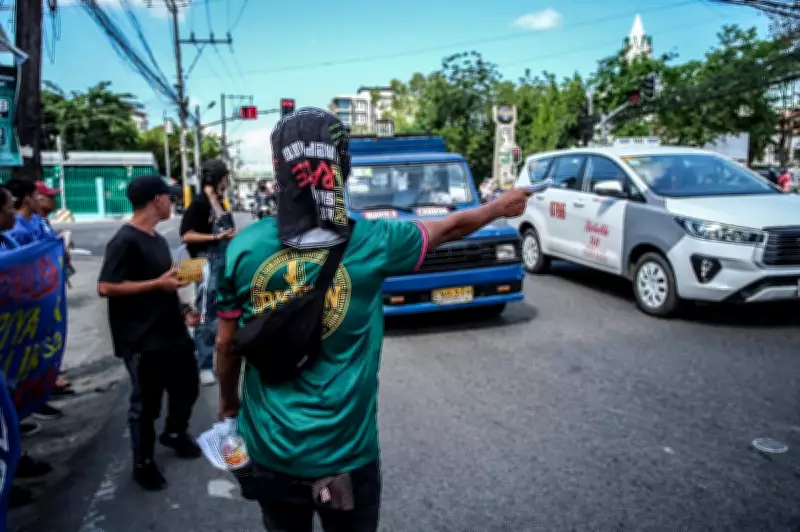
Members of Piston Cebu distributed leaflets during their transport strike in Barangay Mabolo, Cebu City on Thursday, March 19, 2026, as part of a widespread protest that claimed to paralyze public transportation across key areas.
Strike Claims Route Disruption Amid Fuel Price Concerns
Piston Cebu, the local chapter of the Pagkakaisa ng mga Samahan ng Tsuper at Opereytor Nationwide, reported severe route paralysis by 11 a.m. on March 19, 2026, affecting traditional jeepney routes from Consolacion to Cebu City, as well as in the cities of Mandaue and Lapu-Lapu. The group cited escalating fuel costs as a primary driver, with diesel prices reaching approximately P120 per liter, leading drivers to incur daily expenses of up to P3,600.
In a statement, Piston Cebu emphasized the financial strain on drivers, stating, "Why the need to strike? The drivers no longer earn anything." The organization called on the National Government to implement several measures, including:

- Abolishing fuel taxes to alleviate financial burdens.
- Rolling back diesel prices to P55 per liter to restore affordability.
- Securing a P5 fare increase to offset operational costs.
- Establishing a national minimum wage of P1,200 to support drivers' livelihoods.
Officials Counter with Modern Jeepney Operations
Despite the strike claims, officials downplayed the disruption, highlighting the continued operation of modern jeepneys. Kent Francesco Jongoy, Deputy Chief of the Cebu City Transportation Office, dismissed assertions of massive paralysis, noting that an agreement between Mayor Nestor Archival and the Federation of Cebu Transport Cooperatives ensured modern jeepney services remained active.
Jongoy provided data from traffic monitors, which recorded 410 public utility vehicles at major intersections by 2 p.m. on Thursday, March 19, 2026. This figure exceeded the previous day's count of 372 vehicles, indicating robust transportation availability. Additionally, the City prepared buses to assist any stranded passengers, further mitigating potential impacts.
The contrasting perspectives underscore ongoing tensions between transport groups and local authorities over economic pressures and public transit efficiency in Cebu.