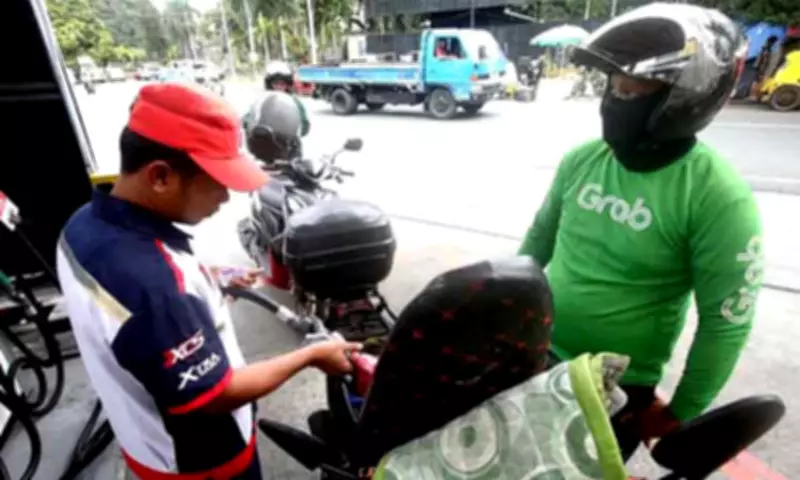
The United Davao Delivery Riders Association (Uddra) has issued a pressing appeal to the national government, demanding the immediate elimination of excise tax and value-added tax (VAT) on fuel. This urgent call comes as escalating fuel prices are severely impacting the daily incomes of delivery riders across Davao City.
Financial Strain on Delivery Riders
In a statement released on March 12, 2026, Uddra highlighted that its members are now forced to spend an extra P50 to P100 each day on fuel due to the relentless surge in pump prices. The group emphasized that this additional expense is equivalent to one or two kilograms of rice daily, or even a full sack of rice per month, significantly reducing the amount they can bring home to their families.
"With the current rise in fuel prices, we are spending an additional P50 to P100 per day, and this may increase further in the coming days as the war in the Middle East continues," Uddra stated, pointing to the ongoing conflicts involving the United States, Israel, and Iran as a key driver of global price hikes.

Impact of Tax Policies
Uddra detailed that under Republic Act No. 10963, known as the Tax Reform for Acceleration and Inclusion (Train) Act, the excise tax on fuel is fixed at P10 per liter, while VAT adds another 12 percent. The association argued that these taxes have contributed to fuel price increases of P10 to P17 per liter in the Philippines, compounding the financial burden on delivery riders.
The group also noted that these costs do not account for additional schemes imposed by the companies they work for, further squeezing their earnings. In response, Uddra has urged the City Government of Davao to provide assistance to their sector and others severely affected by the fuel price crisis.
Global and Local Price Projections
Industry forecasts indicate that diesel prices could climb to P18 per liter and gasoline to P15 per liter by the third week of March. This surge is largely attributed to the closure of the Strait of Hormuz, a critical global shipping corridor between Iran and Oman, due to the Middle East conflict. The strait serves as a vital export route for Gulf oil producers, and its disruption has sent shockwaves through global markets.
In a related development, President Ferdinand "Bongbong" Marcos Jr. has previously mentioned considering temporary reductions or suspensions of excise taxes on petroleum products to mitigate the impact of soaring prices. Uddra's appeal aligns with this potential policy shift, emphasizing the urgent need for relief to protect the livelihoods of delivery riders and other vulnerable sectors.