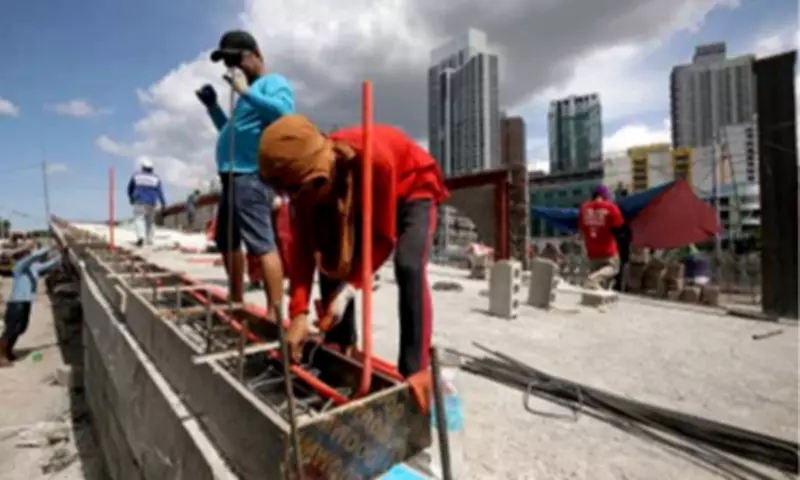
The Kilusang Mayo Uno-Southern Mindanao Region (KMU-SMR) has strongly condemned the recent P20 to P30 daily wage increase in the Davao Region, labeling it an insult to minimum wage earners. According to the labor group, this modest hike fails to address the escalating costs of basic necessities, leaving workers struggling to make ends meet.
A Fractional Increase Amid Soaring Expenses
Jeffry Uypala, spokesperson for KMU-SMR, emphasized that while some might view the wage adjustment as a positive step, it is woefully inadequate. He argued that the increase is a mere fraction compared to the rising prices of essential goods and services, highlighting a disconnect between policymakers and the daily realities faced by workers.
In a statement issued on February 26, 2026, Uypala pointed to specific examples of mounting financial pressures. Davao Light and Power Company raised electricity rates to P11.72 per kilowatt-hour in January 2026, a P2 increase from the previous month. Additionally, the Davao City Water District implemented a 30 percent hike in water rates, while petroleum products have seen significant price surges over the past seven weeks.

Detailed Breakdown of Price Hikes
The spokesperson provided a detailed account of the fuel increases, noting that diesel prices rose by P9.40, gasoline by P5.40, kerosene by P7.40, and liquefied petroleum gas (LPG) by P39.60. These spikes, combined with the wage increase, underscore the growing gap between earnings and living costs.
Criticism of Government and Wage Boards
Uypala accused the Regional Tripartite Wages and Productivity Board-Davao Region (RTWPB-Davao) and the administration of President Ferdinand "Bongbong" Marcos Jr. of prioritizing corporate profits over worker welfare. He claimed that the meager wage hike perpetuates poverty among ordinary laborers while enriching capitalists.
The labor group is urging workers to unite and demand a livable wage that ensures dignity and financial stability. KMU-SMR has reiterated its call for a minimum wage based on a family living wage of approximately P1,200 per day and the abolition of regional wage boards, which they argue are ineffective in addressing nationwide economic disparities.
Official Wage Order Details
Earlier, the Department of Labor and Employment announced that the National Wages and Productivity Commission approved Wage Order No. RB XI-24 and Wage Order No. RB XI-DW-04, as endorsed by RTWPB-Davao. Under these orders, private sector workers will receive daily wage increases implemented in two tranches.
For non-agriculture workers, a total increase of P30 per day will be phased, with P15 added on March 13, 2026, raising the daily minimum wage from P510 to P525, and another P15 on September 1, 2026, bringing it to P540. Agriculture workers will receive a total increase of P20 per day, with P10 on March 13, 2026, increasing wages from P505 to P515, and an additional P10 on September 1, 2026, setting the new rate at P525.
Historical Context and Ongoing Demands
This criticism is not new for KMU-SMR. On May 1, 2025, during Labor Day commemorations, the group advocated for a P1,200 nationwide living wage, citing the increasing difficulty Filipino families face in meeting daily needs. The demand reflects ongoing economic challenges, including rising market prices and broader financial instability.
The labor movement continues to push for systemic changes to support communities grappling with these issues, emphasizing that incremental wage adjustments are insufficient without comprehensive reforms to address cost-of-living crises.