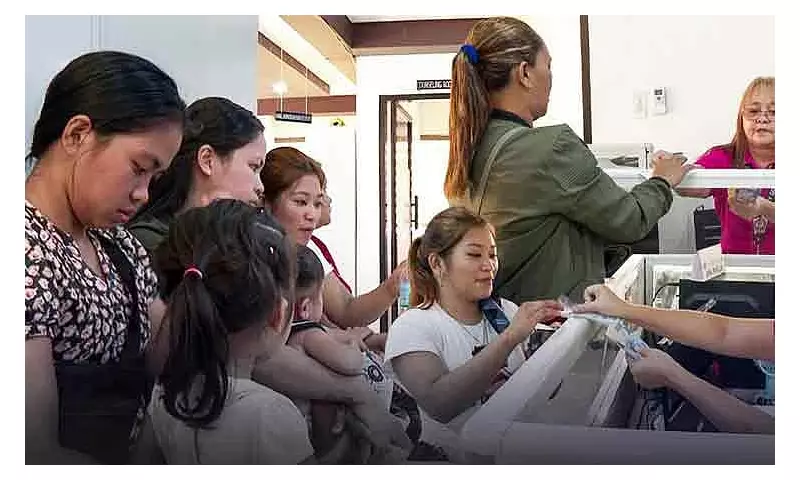
The Davao City Social Welfare and Development Office (CSWDO) has officially launched a new and comprehensive initiative aimed at safeguarding children and strengthening family units. Dubbed the Trabaho, Alalay, sa Bata ug Negosyo sa Ginikanan (TABaNG) Program, it was rolled out on January 16, 2026, marking a significant step in the city's social welfare efforts.
A Targeted Response to Economic Hardship
This program was specifically crafted to address the root economic problems that push children into precarious situations. According to Mark Timbang, the focal person for the Children Welfare program under CSWDO's Children and Youth Welfare Division, consultations revealed that financial struggles at home were a primary concern, often leading children to drop out of school, work, or end up on the streets.
"We saw that there should be a comprehensive program for them," Timbang explained. "It's really better to design a program specifically intended for them... Because everyone has different needs, it's not a one-size-fits-all solution." The TABaNG Program directly targets children identified as at-risk, including those in conflict with the law, engaged in labor, or living in street situations.

Comprehensive Aid Distribution
The initial implementation of the program provided concrete assistance to hundreds of beneficiaries across Davao City's districts. The support was distributed as follows:
- School kits and grocery packs for 25 Children at Risk (CAR) and 25 Children in Conflict with the Law (CICL).
- Similar grocery packs and school kits for 96 Children in Street Situations (CISS) and identified child laborers.
- Cash-for-work grants for 25 parents of CAR and CICL, offering at least ten days of paid employment.
- Livelihood grants for 48 parents of CISS and child laborers to help them start or sustain a small business.
The program reached beneficiaries in ten districts: Agdao, Buhangin A & B, City Poblacion A & B, Talomo A & B, Toril A & B, and Tugbok District.
Building a Foundation for Family Stability
Beyond immediate relief, the program aims to create lasting stability. Timbang emphasized that providing livelihood opportunities for parents is key to reducing risks for children. The office continues to encourage community monitoring to identify children who are permanently on the streets, engaged in labor, or are victims.
One beneficiary, Mitze Aballe Sarona from Barangay 4-A, shared how the cash-for-work component made a difference. "It was a great help," she said. "I am grateful to the CSWDO because they have a program for those who are unemployed. This is a great help for us who are without jobs." For families like hers, the program serves not just as temporary aid but as a potential stepping stone toward greater economic security, ultimately creating a safer environment for children to grow and thrive.