Labor Group Demands Immediate Action on National ₱1,200 Minimum Wage Bills
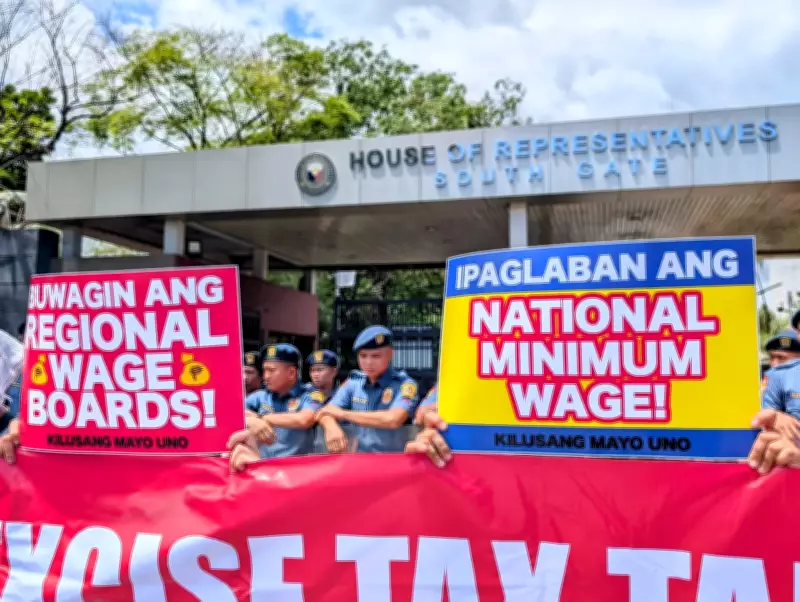
In a significant push for economic reform, the labor group Kilusang Mayo Uno (KMU) has intensified pressure on the House of Representatives to expedite the passage of legislated wage hike bills. On Monday, March 17, 2026, KMU organized a protest march to the Kamara, calling for urgent approval of proposals to establish a national minimum wage of ₱1,200.
Protest March Highlights Worker Struggles
Protesters carried placards with slogans such as “Sahod itaas, presyo ibaba!” (Raise wages, lower prices!) and “Ipaglaban ang national minimum wage” (Fight for a national minimum wage), emphasizing the dire financial challenges faced by workers. According to Salvador Carranza of the National Federation of Labor Unions, current wages are insufficient to cover daily expenses, including transportation and family needs, amid escalating prices.
Rationale Behind the ₱1,200 Wage Proposal
The proposed ₱1,200 wage is framed as a “family living wage”, designed to meet the basic requirements of a five-member household. This figure is based on comprehensive assessments of daily living costs, aiming to ensure that workers can afford essentials without financial strain. Carranza highlighted that without this adjustment, many families continue to struggle with poverty and debt.

Broader Implications for Labor and Economy
The call for a legislated wage hike comes at a critical time, as debates over income inequality and cost-of-living increases dominate national discourse. Advocates argue that a standardized national wage could:
- Boost consumer spending and stimulate economic growth.
- Reduce reliance on government subsidies and social programs.
- Improve overall quality of life for millions of Filipino workers.
However, opponents caution about potential impacts on small businesses and inflation, setting the stage for further legislative scrutiny. The House of Representatives now faces mounting pressure to balance these economic concerns with the urgent needs of the labor force.