The World Bank has canceled $84.9 million in financing for the Cebu Bus Rapid Transit (CBRT) project and dramatically scaled back its scope. This move follows a formal request from the Philippine government for a partial cancellation and restructuring. The decision was driven by long-standing implementation delays and the clear realization that major components of the transit system could not be finished before the loan expires on Sept. 30, 2026.
A downsized vision for urban transit
The funding cancellation eliminates a $25 million grant from the Clean Technology Fund and withdraws $59.9 million from the International Bank for Reconstruction and Development loan. This scales back a mass transit project first approved in 2014 with an original total cost of $228.5 million, which was backed by a mix of international loans, grants and Philippine government matching funds.
Following the restructuring, the budget for the infrastructure component plummeted from $255 million to just $47.4 million. This remaining amount will cover only the completion of the first civil works package, limited land acquisition already undertaken, detailed engineering designs and project supervision. Total active World Bank financing now stands at $56.1 million, of which over 76 percent has already been spent.

A decade of compounding setbacks
The downscaling comes after more than a decade of delays for the transit system, which was originally envisioned to improve Cebu City's transport network through dedicated bus lanes, modern stations and automated traffic systems. Progress first stalled following a change in administration in 2016, when the Department of Transportation (DOTr) temporarily paused the project.
Though the government recommitted to it in 2018, implementation was continuously disrupted by the Covid-19 pandemic, frequent staff turnover within the DOTr, procurement failures and a prolonged shortage of required technical consultants. Because bidding documents for the largest remaining components were never even issued, the World Bank ultimately rated the project's overall progress as "Unsatisfactory."
Canceled infrastructure and stalled resettlement
As a result of the restructuring, the World Bank completely removed Civil Works Packages 2 and 3, which represented the bulk of the system's planned infrastructure. This means international funding will no longer back the construction of trunk CBRT lanes through major thoroughfares like N. Bacalso Ave. and the route from the Provincial Capitol to IT Park. It also eliminates planned bus terminals, depots, and 18 kilometers of feeder routes.
Although engineering designs for these phases were complete, actual construction never started due to slow right-of-way acquisition — the process of securing private land for public use. Land acquisition and resettlement efforts were minimal; out of 891 affected lots and structures, only 52 received full compensation, none of the 508 affected businesses received their entitlements and a resettlement site for 57 informal settler families was never acquired.
Funding for modernized traffic management was also heavily affected, dropping from $21.5 million to just $1.7 million. This cut eliminates the physical installation of automated Area Traffic Control and Intelligent Transport System infrastructure at intersections, leaving only basic design consultancy services in place.
The impact on Cebuano commuters
For local commuters, this means the system operating before the September 2026 deadline will be a fraction of what was promised. Nearly 11 years after project approval, only the 2.38-kilometer first phase is substantially complete, connecting the Cebu South Bus Terminal toward the Capitol area.
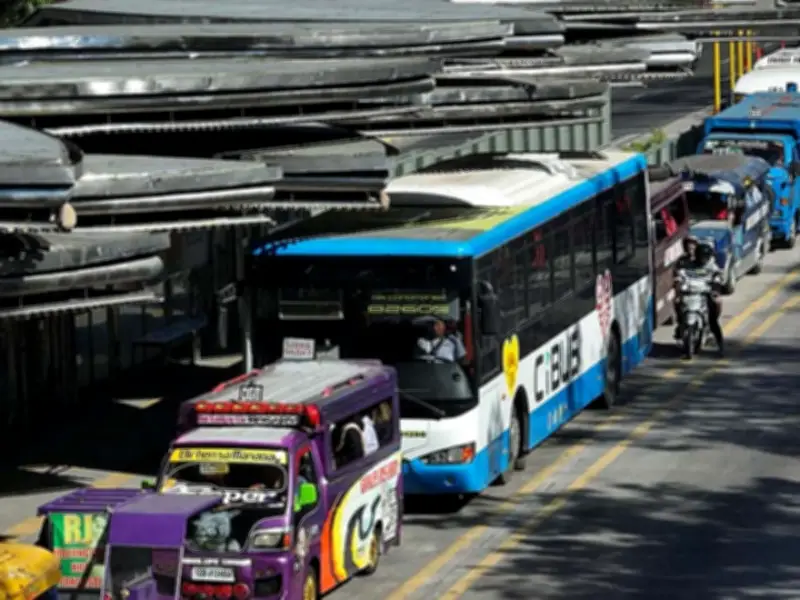
To utilize what has been built, the government intends to launch an interim bus service before the project closes, using the finished corridor and the existing Cibus fleet to run between IL Corso in the South Road Properties (SRP) and IT Park.

However, the World Bank warned that this short segment is too limited to show the true benefits of a rapid transit system. Furthermore, because automated traffic signaling was cut from the budget, transit authorities will have to rely heavily on manual traffic enforcers and station personnel to manage passenger movement and road operations. Without these automated systems, the project may fail to deliver the expected improvements in passenger satisfaction and road safety.
Localized pushback on next steps
Adding to the project's uncertain final months are local disagreements over how the scaled-down system should be aligned. The Cebu City Council recently approved a non-binding resolution rejecting a DOTr proposal to realign the project to prioritize the SRP segment, calling instead for a return to the project's original 2014 alignment.
While this measure does not legally prevent the DOTr from moving forward with its changes, it underscores the ongoing friction surrounding Cebu's transit ambitions as the final loan expiration date draws near. With the deadline approaching fast, local commuters are left waiting to see how this severely scaled-back system will handle the city's daily transportation needs.