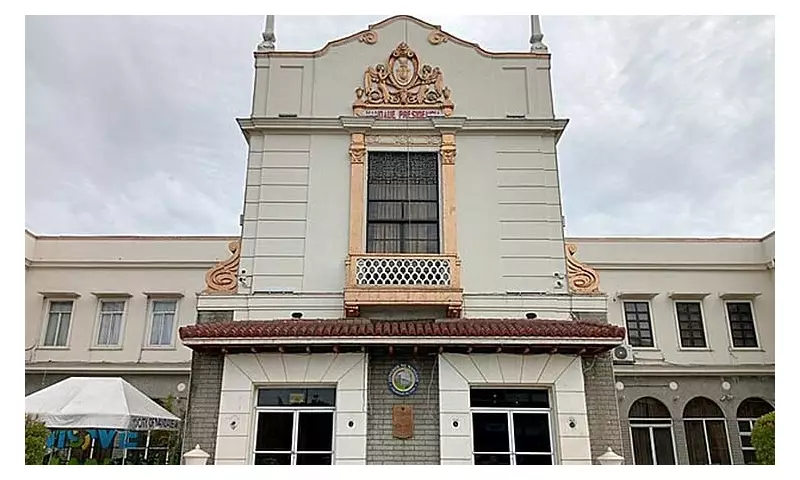
The Mandaue City Government has officially rolled out a business tax increase for the year 2026, opting for a phased implementation to cushion the impact on local enterprises. Instead of applying the full 10 percent adjustment permitted by law, the city will enforce a five percent increase this year, with the remaining five percent scheduled to take effect in 2027.
Balancing Recovery with Revenue Needs
This decision, endorsed by Mayor Thadeo Jovito “Jonkie” Ouano, is a direct response to the financial strain on the business community following two major calamities in late 2025: the earthquake on September 30 and Typhoon Tino on November 4. City officials describe the move as a necessary compromise.
August Lizer Malate, head of the Business Permit and Licensing Office (BPLO), framed the increase as part of a regular five-year cycle, with past adjustments occurring in 2006, 2011, 2016, and 2021. He characterized the staggered approach as a "win-win situation", allowing the city to meet revenue goals while giving businesses time to adapt.

Councilor Joel Seno, chairman of the committee on appropriation, budget, and finance, supported this view. He stated that the method ensures businessmen are not overly burdened while enabling the city to comply with legal frameworks and fund essential public services.
Understanding the Legal Framework and Tax Mechanics
Officials cited Republic Act 7160, the Local Government Code of 1991, as the basis for the adjustment. However, the law grants local government units the authority to adjust rates, not a mandate to increase them. The cited "five-year rule" actually restricts how often hikes can occur—no oftener than once every five years—rather than requiring them on that schedule.
Regarding how the increase works, Malate clarified it applies to the tax rate, not as a flat fee. For instance, if a business tax rate is 1% of gross sales, a 10% increase raises it to 1.1%. The actual tax bill remains tied to a business's declared gross sales. Malate noted that businesses experiencing a decline in sales may pay less if they can submit proper documentation like BIR reports or audited financial statements.
The adjustment is expected to affect approximately 16,000 to 17,000 businesses across sectors including retail, real estate, and manufacturing.
Business Community Reaction and Economic Rationale
The local business sector has largely accepted the phased increase as a practical compromise. Mark Ynoc, president of the Mandaue Chamber of Commerce and Industry, acknowledged the city's need for revenue to finance services, even as businesses require recovery assistance. "This staggered and gradual implementation is already quite helpful and helps strike a balance in the economy," Ynoc said, emphasizing that tax compliance is vital for long-term growth.
For smaller operators, however, any increase poses a challenge. Business owner Jera Marie Reponoya shared that the additional cost feels heavy, especially with renewals due in January after holiday expenses and bonus payouts. "Yes, it's gradual, but even a five percent increase is still heavy... Renewals are really expensive," she said, though she conceded that a gradual hike is preferable to a full, immediate one.
City officials maintain the revenue is crucial to offset rising inflation and cover increased costs for service vehicles, construction materials, and other operational expenses. The staggered approach also aims to prevent a sudden ripple effect on consumer prices and employment that a steeper hike might trigger.