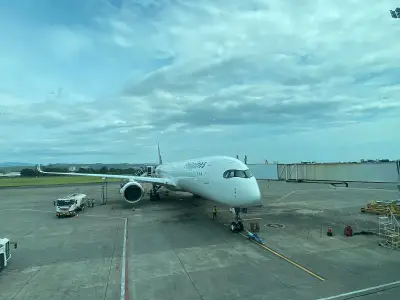
Angeles City, a prime destination for South Korean tourists, experienced an unexpected downturn during the peak travel season of late 2025. Contrary to the usual trend where visitor numbers from Korea nearly double starting in November, the city saw a significant drop, leaving local business owners hopeful for a better 2026.
Price Competitiveness and Market Challenges
Insights from Korean residents and investors point to a key issue: local prices in Angeles City and Clark Freeport are no longer competitive compared to neighboring markets like Vietnam and Cambodia. This economic factor, among others, contributed to the decline in arrivals. Over the years, many Koreans have not only visited but also settled and invested heavily in the area, particularly in tourism-related ventures such as hotels, restaurants, and entertainment spots.
The strength of this community was on full display at a recent birthday celebration for businessman David Kim, a member of the Rotary Club of Angeles. Held at the rooftop of the new Times Hotel in the heart of the Korean district, the event, with its authentic Korean motif, made attendees feel as if they were in Seoul. Notable guests included Times Hotel owner Joo Yong-Kuk, Chairman Choi Jong Pil, and directors Lee Tae-Ho and Ha Jin-Ho from the Korean Community Association.

The Rise of a Korean Enclave in Pampanga
The Korean migration to Angeles City began in earnest in the late 1990s. The influx increased dramatically in the early 2000s following the opening of Clark International Airport to international flights. What started as a trickle quickly transformed Barangay Anonas's Friendship Road into a bustling "Korean Town."
Today, this vibrant stretch, reminiscent of Seoul's Gangnam district, spans over a kilometer. It is lined with a dense concentration of Korean restaurants, coffee shops, hotels, KTV bars, and grocery stores. The area comes alive at night with colorful blinking lights and neon signs in Hangul, the Korean script. There is potential for this commercial zone to expand further into neighboring barangays like Sto. Domingo and Calibutbut in Bacolor over the next decade or two.
Historical Context and Lasting Division
The presence of a large Korean community in the Philippines is also viewed through a broader historical lens. The Korean Peninsula was divided after the Korean War (1950-1953), resulting in a communist North and an American-allied South, separated by the 38th parallel. Despite various efforts, reunification remains elusive, with North Korea under Kim Jong-Un continuing to advance its nuclear and missile programs.
Meanwhile, South Korea has achieved remarkable economic progress, boasting world-class electronics, automobile, and telecommunications industries. This stark contrast prompts reflection on development trajectories. In the 1950s, the Philippines was considered the second most progressive nation in Asia after Japan, while South Korea was recovering from war devastation. The current economic landscape leads many to ponder the shifts in regional fortune and competitive standing.
As Angeles City's business community looks ahead to 2026, the challenge is clear: to address competitive pricing and enhance the value proposition for its vital Korean tourist market to reclaim its status as a top destination.