Cebu's tourism sector is approaching 2026 with a sense of guarded hope, following a year marked by significant challenges. The industry found its anchor in the resilience of Filipino travelers, who helped stabilize the local economy after natural disasters and fluctuating international interest.
Domestic Tourism Acts as a Crucial Buffer
According to Mia Singson-Leon, president of the Hotel, Resort and Restaurant Association of Cebu (HRRAC), the year 2025 demonstrated a path to recovery, though it remained difficult, especially in the first six months. Hotel operators contended with reduced visitor numbers from important overseas markets and interruptions to local travel.
"Domestic tourism proved to be the industry’s stabilizer this year," Singson-Leon emphasized. This was particularly vital after Cebu was hit by a 6.9-magnitude earthquake on September 30 and, just five weeks later on November 4, by Typhoon Tino, which caused extensive flooding across the region. Local travelers played a key role in filling hotel rooms and maintaining occupancy rates during this period.

A Mixed Year with Promising Expansions
The island's tourism performance in 2025 presented a varied picture. Arrivals from South Korea, traditionally Cebu's top international source, dropped in the early part of the year. However, the numbers later improved as flight services to Mactan-Cebu International Airport were restored.
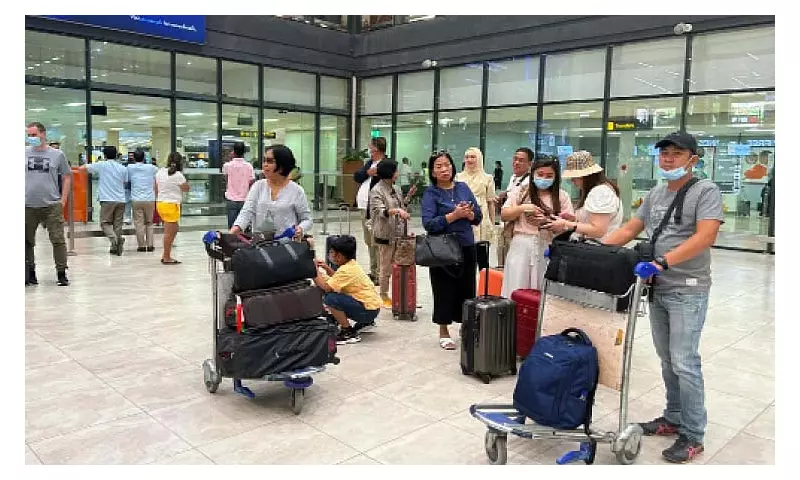
Overall, domestic tourism—including the meetings, incentives, conferences, and exhibitions (MICE) segment—was the primary growth driver. Data shows over 7.7 million domestic arrivals in Mactan, while international arrivals surpassed 2.6 million, marking a two percent increase from the previous year.
A significant development was the expansion of direct air links, which helped attract a more diverse set of international visitors. Recent launches include:
- Firefly Airlines flights from Kuala Lumpur.
- Vietnam Airlines services from Hanoi.
- Jetstar Australia flights from Brisbane.
Connectivity with South Korea was further enhanced. Aero K Airlines will inaugurate a direct Cebu-Cheongju route on December 30, while capacity on the Cebu-Incheon route grew after T'way Air deployed its A330 aircraft on December 12. Additionally, Philippine Airlines started Cebu's first direct service to Guam.
MICE and New Campaigns to Drive Future Growth
The MICE sector is anticipated to be a cornerstone for sustaining tourism growth in the coming year. Cebu is gearing up to host major events, starting with the 45th ASEAN Tourism Forum from January 27 to February 4, 2026. This high-profile gathering will bring together tourism ministers, organizations, and media from across the region.
The island's capacity for such events will be bolstered by new venues scheduled to open in 2026, including the Mactan Expo, SM Arena, and what is projected to be the country's largest SMX Convention Center.
Despite the positive trends, challenges remain. Singson-Leon pointed out that high domestic airfares, transport connectivity issues, traffic, and safety concerns continue to affect Cebu's competitiveness, especially when compared to destinations like Thailand and Vietnam.
Looking forward, HRRAC is collaborating on initiatives like the recently launched "Visit Cebu" campaign. This joint effort by the Department of Tourism, Cebu Pacific, and HRRAC offers complimentary hotel stays to international tourists flying directly from markets including Korea, Japan, Singapore, Vietnam, Hong Kong, and Thailand.
"This aims to reinvigorate Cebu tourism and foster strong recovery from the calamities of 2025," Singson-Leon stated, summarizing the industry's forward-looking strategy as it turns the page to a new year.