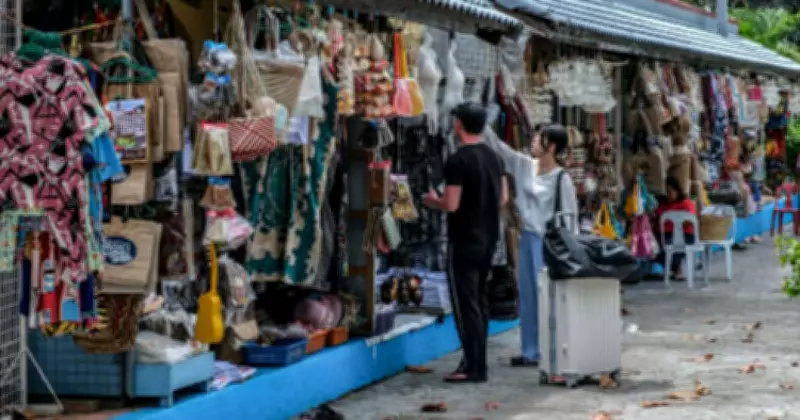
Seashell Souvenir Trade at Historic Liberty Shrine Faces Steep Decline
At the historic Liberty Shrine in Barangay Mactan, Lapu-Lapu City, the once-bustling seashell souvenir trade has quieted significantly. Veteran vendors who have operated stalls for decades now struggle with sharply reduced earnings, a stark contrast to the thriving marketplace that once funded college educations and supported families.
Veteran Vendors Confront Financial Hardships
Seventy-five-year-old Melecia Moreno, who has been selling seashell crafts at the shrine since the 1970s, carefully arranges keychains and chandeliers at her small stall. "We're disappointed because our sales have dropped so much," she explained. "It's just not enough anymore. We have to carefully budget because if we don't, there's no way we can make ends meet."
On a good day, Moreno now earns between 300 and 400 pesos, barely covering daily expenses. This represents a dramatic decline from pre-pandemic times when she regularly earned 3,000 to 10,000 pesos daily. Her stall once provided enough income to send all four of her children through college.

Another longtime vendor, identified only as Leni, faces similar challenges at age 61. Her daily earnings fluctuate between 40 and 200 pesos, making it difficult to afford basic necessities like rice. "Tourists don't always buy," she noted, highlighting the unpredictable nature of current sales.
Multiple Factors Contribute to Trade Decline
Minerva Romande, focal person of the Mactan Shrine Souvenir Vendors Association Inc., explained that the trade began faltering during the COVID-19 pandemic when the tourist site temporarily closed. Stalls that once earned 13,000 to 20,000 pesos daily now earn far less.
"It hasn't really returned to what our sales were before because of COVID-19," Romande said. "But you can't really say it's zero, it just declined, but we can still make a living, we can still survive."
The decline mirrors broader tourism trends in the region. Passenger traffic at Mactan-Cebu International Airport plummeted during the pandemic, falling from 12.7 million in 2019 to just 1.37 million in 2021. While recovery has been underway, with traffic reaching 11.71 million in 2025, the souvenir trade has not rebounded proportionally.
Beyond the pandemic, several factors have contributed to the decline:
- Fewer educational tours, once considered the vendors' "bread and butter"
- Fast-paced tourist itineraries that limit shopping time
- Limited accessibility of vendor stalls within the shrine complex
- High material costs and competition from other destinations
Tourism Data Reveals Seasonal Patterns
Data from the City Tourism Office shows that the Liberty Shrine recorded 96,209 tourist visitors in 2025. The highest visitor numbers came during specific periods:
- School field trips in May (14.4 percent of annual visitors)
- Kadaugan sa Mactan celebrations in April (12.4 percent)
- Ironman 70.3 event in August (10.7 percent)
The lowest visitor numbers occurred in February (5.9 percent) and June (6 percent). Meanwhile, Lapu-Lapu City welcomed 682,108 tourists in 2025, representing a 31.53 percent increase from the previous year's 518,612 visitors.
Adaptation and Innovation for Survival
Despite the challenges, vendors have demonstrated remarkable adaptability. Moreno now offers diversified products including fridge magnets, wallets, polo shirts, dasters, and statues of Datu Lapulapu. Leni focuses primarily on keychains. The top-selling item remains the "Bubod" bracelet, priced at 100 pesos, which takes three to six minutes to create depending on customization.
The City Government is working to revive Lapu-Lapu's shellcraft industry through several initiatives:

- Renovating the Lapu-Lapu Gallery in Barangay Gun-ob to feature local shellcraft
- Planning vendor demonstrations of crafting techniques at the shrine
- Encouraging vendor participation in large events and tourist circuits
- Creating "one-stop-shop" experiences at hotels and the shrine
A Legacy Beyond Profit
For many vendors, the seashell trade represents more than just income—it's a generational legacy. Romande emphasized that the trade has supported vendors' children through education and helped her complete college. "It keeps us going because I think this is our mission," she said. "Because this is how we make a living, although rain or shine, we just keep fighting because it's already part of daily life."
Vendors maintain integrity by keeping prices fair despite financial pressures. Many remain hopeful that the trade can endure, though concerns persist about whether the business can be passed to the next generation. Moreno's eldest daughter has expressed interest in continuing the family tradition, while Leni worries about unstable income affecting her two children's future.
The soft clink of seashell wind chimes and steady hum of sales that once filled the historic Liberty Shrine has quieted considerably. As vendors adapt to changing tourism patterns and economic realities, they continue their daily work, preserving both their livelihood and a piece of local cultural heritage for future generations.