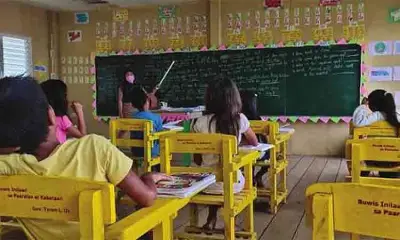
The Commission on Higher Education (CHED) has authorized higher education institutions to shift to 100 percent online classes, a move that has elicited mixed reactions from students. Announced as a response to the ongoing oil crisis and rising transportation costs, the policy aims to provide schools with flexibility while easing the financial burden on learners. However, students are questioning whether this is a practical solution or another learning challenge.
Relief for Some
For many students, the decision brings a sense of relief. With fuel prices and fares continuing to climb, online classes are seen as a practical way to reduce daily expenses. Fierre Marie Daquiado, a student from the University of the Visayas, shared: “This setup is a big help for students like me because transportation costs are really high right now, and I live far from my school. It allows me to save money and manage my allowance better.”
Preference for Face-to-Face
However, not all students share this optimism. Era Figuracion, also from the University of the Visayas, expressed a different view: “In my experience, I prefer face-to-face classes over online classes because they help me stay productive. I wake up early, participate actively in school, and adapt better to discussions. I don’t feel good about CHED allowing 100 percent online classes since many students, including me, prefer face-to-face learning. However, amid the current crisis, it can still help those struggling financially, though I believe hybrid learning could be a better middle ground.”

Hybrid Learning as a Middle Ground
Andria Abajo, a student from Cebu Technological University, echoed the call for balance. “Given the current economic situation—gas prices continue to rise, and so does everything else—I find myself preferring hybrid learning over purely face-to-face or fully online classes. Since my campus is not close to where I live, daily commuting is exhausting and financially draining. Hybrid learning is more practical and manageable, especially with rising inflation and transportation costs. When CHED allowed 100 percent online classes, it gave me relief because it is more practical in today’s situation, even if I still prefer face-to-face interaction. However, I also believe this setup is not entirely fair for everyone, especially students with limited internet access, lack of devices, or poor learning environments at home.”
Inequality Concerns
Beyond convenience and challenges, the issue highlights inequality among learners. Students from low-income households often face greater difficulties adapting to online setups, making access to education uneven despite the intention of flexibility.
Call for Support
In the end, students are not rejecting online learning—they are asking for balance. Many emphasize the need for stronger support systems, such as internet allowances, learning devices, and clearer academic guidelines, to make the transition fair for everyone.