Davao Occidental Among Top 10 Divisions for Student Reading Struggles, Edcom II Reveals
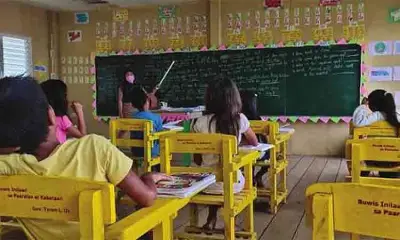
Davao Occidental has been identified as one of the top ten divisions of the Department of Education (DepEd) with the highest percentage of students facing difficulties in reading, according to the Second Congressional Commission on Education (Edcom II). This finding comes from the latest Comprehensive Rapid Literacy Assessment (CRLA), conducted at the start of the Academic Year 2025–2026, where the province ranked tenth with 57.17 percent of students struggling with reading.
Provincial Context and Demographics
Davao Occidental, a province in the Davao Region, is one of the newest provinces in the Philippines, having been created in 2014. It comprises five municipalities and, based on the 2020 census, has a total population of 317,159. Despite its relatively recent establishment, the province faces significant educational challenges, as highlighted by the CRLA results.
National Rankings and Comparative Analysis
The CRLA results show that Tawi-Tawi leads the list with the highest percentage of students struggling with reading at 75.60 percent, followed by Maguindanao del Norte at 65.38 percent. The Special Geographic Area (North Cotabato) ranks third with 64.49 percent, while Zamboanga City and Sarangani follow with 60.72 percent and 60.57 percent, respectively. Further down the list, Sulu records 59.63 percent, Maguindanao del Sur at 58.46 percent, Lamitan City at 57.77 percent, Basilan at 57.59 percent, and Davao Occidental in tenth place.

In contrast, Sto. Tomas City reported the lowest percentage of struggling readers at 23.42 percent. Other areas with low rates include Batanes, Bohol, Mountain Province, and Valenzuela City. The sixth to tenth spots for lowest percentages are held by Cavite City, Tuguegarao City, Malolos City, Leyte, and Carmona City, respectively.
Edcom II's Initiatives and Recommendations
To address these literacy issues, Edcom II recently launched the "LGU Playbook: Fixing the Foundations of Local Education," which outlines how Local Government Units (LGUs) can contribute to improving the country's education system. The playbook details actionable steps for local officials, emphasizing the critical role of community involvement. "When the local education system fails, communities feel the consequences — in the form of unemployment, poverty, and weakened local revenues," stated Edcom, underscoring the broader societal impact of educational shortcomings.
Background on Edcom II and Legislative Framework
Edcom II is a national commission established through Republic Act No. 11899, also known as the Second Congressional Commission on Education (Edcom II) Act, which was passed in July 2022. The commission is tasked with conducting a comprehensive national assessment and evaluation of the Philippine education sector and proposing transformative solutions. It is composed of lawmakers from the Senate and the House of Representatives, guided by an advisory council, and assisted by a technical secretariat.
Historical Data and Functional Literacy Concerns
Previous data from the 2024 Functional Literacy, Education, and Mass Media Survey (Flemms) further highlight Davao Occidental's educational challenges. The province posted the lowest literacy rate in the region at just 74.2 percent, raising concerns about access to and quality of education. In terms of functional literacy—defined as the ability not only to read, write, and compute but also to comprehend and analyze information—the gaps are even more pronounced. Among individuals aged 10 to 64, Davao Occidental recorded a concerning rate of 46.6 percent, indicating a need for targeted interventions to boost educational outcomes.