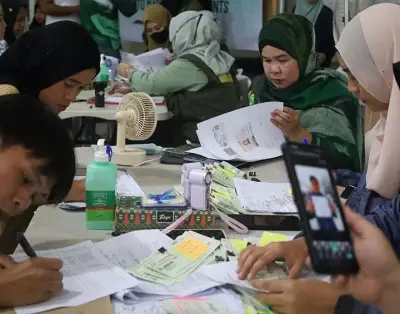
The Philippine government has cemented its commitment to accessible education by earmarking a massive P67 billion in the freshly signed 2026 National Budget to fully fund the Universal Access to Quality Tertiary Education Act. This landmark allocation, the highest ever for the education sector, ensures the continuation of free college for millions of Filipino students nationwide.
Historic Funding for Millions of Students
This substantial budget will cover tuition and miscellaneous fees for an estimated 5.7 million students enrolled across various institutions. The program, widely known as "Libreng Kolehiyo," benefits learners in state universities and colleges (SUCs), local universities and colleges (LUCs), technical-vocational institutions, and select private schools. Senator Paolo "Bam" Aquino IV, the law's principal author and sponsor, celebrated the funding as a crucial win for families grappling with increasing costs of living.
Aquino emphasized that the education budget was protected from cuts, resulting in the largest investment in the country's educational history. "We fought to protect it," he stated, shifting the focus to implementation. "Now that the budget process is complete, the responsibility is in the hands of education agencies. They must do what is right, set fair pricing, and ensure that corruption does not enter this massive funding."

Breakdown of the P67 Billion Education Fund
The record-breaking budget is strategically distributed to ensure comprehensive support:
- P26 billion for State Universities and Colleges (SUCs), directly aiding about 5.2 million students in 117 institutions.
- P6.7 billion for Local Universities and Colleges (LUCs), supporting nearly 500,000 students in 126 LUCs.
- P27.3 billion for the Tertiary Education Subsidy (TES), providing allowances for books, transportation, and housing to 1.5 million underprivileged students.
- P2.7 billion for the Tulong Dunong Program (TDP), offering targeted financial aid.
- P500 million is a new fund for Allied Health Sciences, covering fees for nursing and medical students' Related Learning Experience (RLE).
Ensuring Proper Implementation and Oversight
Under Republic Act 10931, students in 114 SUCs and LUCs are automatically exempt from fees upon enrollment. Students in private institutions may apply for the TES through their school or the UniFAST portal. Priority for subsidies goes to students from low-income households identified under Listahanan 2.0 and the 4Ps program, with annual financial aid ranging from P15,000 to P27,000.
Despite the secured funding, Aquino underscored the necessity of strict monitoring. "The Committee on Basic Education will closely monitor the proper use of the funds. There should be no ghost projects and no ghost students," he asserted, vowing to ensure the money is spent correctly for the nation's education. He framed the P67-billion allocation as a vital investment in human capital, paving the way for a more equitable system where a student's future isn't limited by finances.