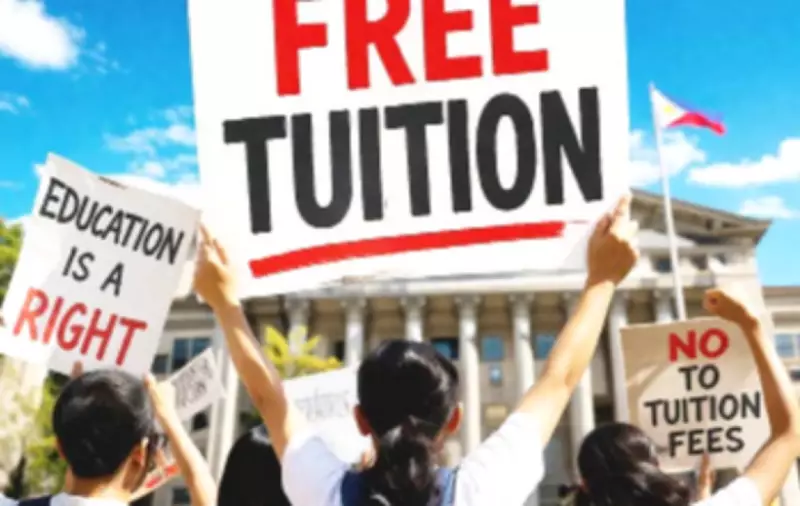
Students in Cebu Voice Concerns Over Free Tuition Policy
Financial challenges continue to pose a significant barrier for students pursuing higher education degrees, despite government initiatives like free tuition. Recent dropouts and current beneficiaries from Cebu have shared their perspectives, highlighting that while the policy is a step forward, it often falls short in addressing the full spectrum of student needs.
Insufficient Support Beyond Tuition
Jomer Dela Cerna, who recently dropped out from a state university in Cebu, acknowledged the benefits of free tuition but pointed out its limitations. "I think it's helpful," Dela Cerna stated, echoing a common sentiment among students. Kate Verano, a former private school student in Cebu, agreed, noting that the policy would have improved her chances of completing her studies. However, she emphasized, "Yes, it's already an opportunity to be in school, with free tuition, especially if you're in college, but it doesn't mean it's 'enough' that students are not struggling anymore because of that."
Kimberly Lumapas further elaborated on this issue, stressing that other expenses remain a burden. "I think it's really not enough because even if tuition is free, it doesn't really excuse the other expenditures," she said, referring to costs like books, supplies, and technology.

Structural Pressures and Poverty
Johannes Ungria, a self-supporting college student at a state university, highlighted deeper systemic problems. "Even if the free tuition system is progressive and important, it's barely enough to ensure the retention and completion of students," Ungria explained. "The system only focuses on the access they grant to students, not on the sustainability of studies. Structural pressure brought by being poor is a problem."
Dela Cerna, who also worked while studying, experienced these pressures firsthand. Financial constraints forced him to choose an unfamiliar course because his preferred options were located in Lapu-Lapu City or Manila, illustrating Ungria's point about the structural challenges faced by needy students.
Calls for Enhanced Government Initiatives
Students have proposed several additional measures to complement free tuition. Verano suggested that the government provide free meals, books, supply assistance, free review programs, and job placement assistance. "I knew a lot of people weren't able to continue, especially those who needed to take board exams, so they just worked," she said. "Free tuition alone doesn't mean free education. Students still need support to actually stay in school and succeed."
Lumapas emphasized the importance of access to technology, machines, and allowances to help students manage their studies effectively. Ungria advocated for a shift from an access-based policy to a completion-oriented approach, recommending:
- Living allowances that are sufficient for daily needs
- Labor protection and flexibility for working students
- Institutionalized mental health remediation programs
- Quality implementation of policies with clear targeting of those in need
- Transparency and accountability from educational institutions
Ungria concluded, "The quality of implementation is not just the existence of the policy that is critical — clear targeting of those most in need, transparency and accountability of schools." This feedback underscores the urgent need for comprehensive reforms to support student success in higher education.