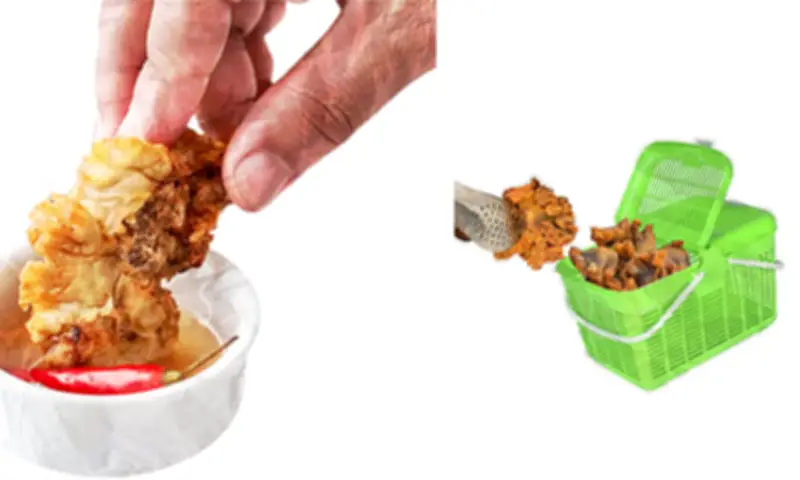
Ginabot, the deep-fried pork intestines that have become a Cebuano icon, is more than just a cheap snack. It represents a deep cultural tradition of resourcefulness and respect for the animal, where every part is transformed into a culinary masterpiece.
The Pungko-Pungko Experience
Vendors typically fry ginabot right in front of their customers alongside an assortment of other fried treats like spring rolls and longganisa. This dining style is affectionately called “pungko-pungko,” which translates to “squatting” — a nod to how customers crowd around low stalls, sitting on small benches to eat.
For Virgilio, a veteran pungko-pungko vendor stationed at the Lapu-Lapu City PUJ Terminal, a street food stall is one of the most accessible business ideas to start. However, he emphasizes that the real work happens before the food ever hits the oil.

“When you buy intestines, make sure you thoroughly check them and, most of all, clean them well. That is always the secret to having the best ginabot,” Virgilio shared.
From Humble Offal to Crispy Perfection
Ginabot — Cebu’s own iconic version of chicharon bulaklak — is best enjoyed with puso (traditional hanging rice). The experience is incomplete without the signature dipping sauce: a mix of local vinegar, soy sauce, plenty of crushed chilies and a generous helping of diced white onions.
Making ginabot is a remarkable culinary transformation that turns pork mesentery — the ruffled tissue attached to the intestines — into Cebu’s ultimate crunchy snack. The meticulous process begins at the sink, where the intricate, ruffled folds are thoroughly washed and soaked in a sharp vinegar bath to eliminate any gamey odors. Once pristine, the meat is simmered for hours in a bubbling pot seasoned with salt, peppercorns and bay leaves until it becomes melt-in-your-mouth tender.
After cooling, it is cut into bite-sized pieces and tossed in a light coating of cornstarch. Finally, the meat hits a cauldron of roaring hot oil, deep-frying until it emerges as ginabot — golden, puffed-up and spectacularly crunchy, ready to be drenched in spiced vinegar.
The Philosophy of “Savor Everything”
This “nose-to-tail” philosophy — where nothing from the animal is wasted out of resourcefulness and respect — is deeply embedded in Filipino food culture, a trait often highlighted by culinary experts and food historians alike.
In “The Adobo Road Cookbook,” author Marvin Gapultos beautifully captures this mindset: “Savor everything, waste nothing.”
“The Filipino use of offal is one of the cultural traditions that occurred before, during and after colonial times, and it still continues to this day,” Gapultos wrote. “This tradition of enjoying every last bit of an animal arises not only out of thrift or necessity, but because these bits taste so darn good.”
The next time you sit down at a crowded pungko-pungko bench, crushing a piece of crispy ginabot into a bowl of spicy vinegar, remember that you aren’t just enjoying a cheap meal. You are taking part in a rich, delicious Cebuano tradition of resourcefulness and pure culinary joy.