What occurs in distant corners of the globe rarely remains isolated. Decisions forged in faraway halls of power create ripples that cross international borders, and in the ensuing days, ordinary individuals—frequently the most vulnerable—bear the consequences. A sense of perpetual darkness can descend, and violence often repeats in a seemingly endless, brutal cycle.
The Haunting Echo of Conflict
In the recesses of our collective consciousness echoes the relentless, haunting rhythm of Rudyard Kipling's "Boots," a chant that perfectly captures the exhausting, mechanical march of warfare. This serves as a stark reminder of a disturbing truth: wars seldom conclude neatly, and those who endure the greatest suffering are typically those with no voice in their inception or their resolution.
The powerless do not decide the victors or the vanquished. Instead, they lose their homes, their families, and the entire fabric of the lives they once knew. Cinema has consistently attempted to confront these harsh realities head-on.

Five Films That Illuminate the Aftermath
These five exceptional films offer profoundly sobering reflections on war. They achieve this not through depictions of grand battles or political triumphs, but by focusing intently on the deeply human stories left shattered in conflict's devastating wake.
"Grave of the Fireflies" (1988)
Few war films capture profound heartbreak with the quiet, devastating power of this animated masterpiece. Set during the final, desperate months of World War II, the narrative follows two Japanese siblings struggling for mere survival after American air raids utterly destroy their hometown.
With its meticulously careful pacing and hauntingly minimalist sound design, the film portrays the catastrophic toll war exacts on children left completely to fend for themselves. It stands as a poignant, unforgettable reminder that war's most tragic victims are invariably the youngest and most defenseless among us.
"First They Killed My Father" (2017)
Based on the powerful memoir of Cambodian human rights activist Loung Ung, this film recounts the terrifying rise of the Khmer Rouge regime through the innocent eyes of a young girl violently forced to flee her home. As her family is brutally scattered by the regime's systemic violence, simple survival becomes the singular, overwhelming goal.
The story powerfully reveals how war ruthlessly erases social status—wealth and comfort mean absolutely nothing when a merciless totalitarian force takes control. It also shows how families desperately cling to the memory of one another even as they are physically torn apart.
"Beasts of No Nation" (2015)
War does not only claim children's lives; it systematically steals their very childhood. This harrowing and visceral film follows a young boy who is forcibly conscripted to become a child soldier during a brutal, unnamed civil war in an African nation.
Through his traumatized perspective, the film unflinchingly exposes how children are recruited, psychologically manipulated, and brutally coerced into committing acts of violence long before they can possibly comprehend the horrific, lifelong consequences.
"The Pianist" (2002)
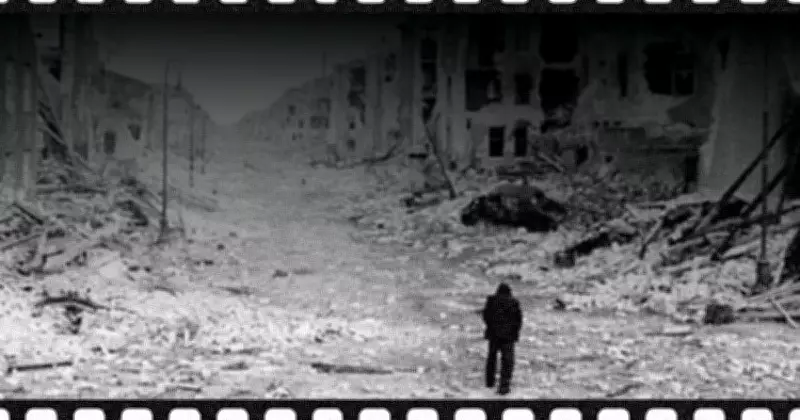
This acclaimed film tells the true, harrowing story of Polish-Jewish pianist Władysław Szpilman as he struggles to survive the total destruction of Warsaw during World War II. Once a celebrated radio performer, he is forced into a precarious, desperate hiding as the entire city collapses violently around him.
It is a haunting, intimate portrait of profound displacement—of not knowing where to turn when the war feels endless and the familiar world you once knew has completely and irrevocably disappeared.
"Come and See" (1985)
Widely regarded as one of the most brutally harrowing anti-war films ever created, this Soviet-era story follows a young Belarusian boy who joins partisan resistance fighters during the Nazi occupation. The film resolutely refuses to soften any of its visceral horrors, showing explicitly how war strips away innocence and childhood, exposing young minds to unimaginable, soul-crushing cruelty.

Perhaps the film's most profoundly disturbing realization is that no place offers true sanctuary—not even a house of worship, as the film graphically depicts atrocities committed against civilians desperately seeking refuge within a church.