Filmmakers Rely on Practical Effects to Bring Realism to Horror Film 'PRIMATE'
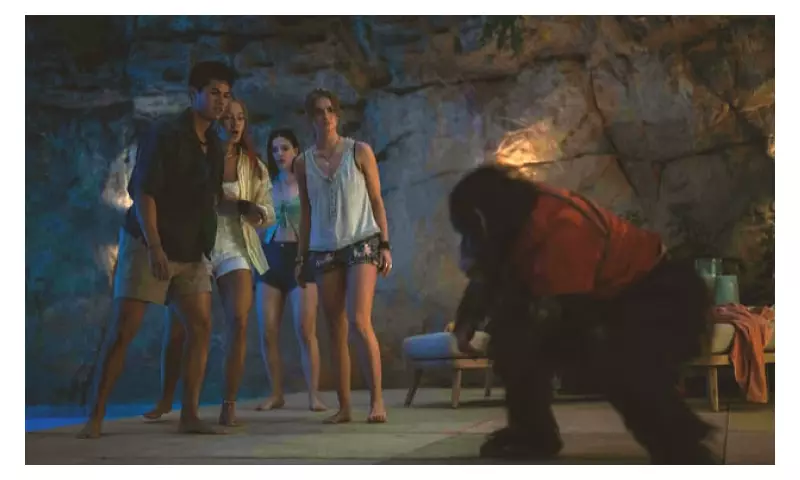
In the horror film "PRIMATE," director Johannes Roberts has taken a bold approach by emphasizing practical effects over digital technology to create a more immersive and terrifying experience. The film features Ben the chimpanzee, portrayed by actor and movement specialist Miguel Torres Umba, with filmmakers opting for in-camera effects to achieve a sense of immediacy and physical threat.
Director's Vision for Authentic Horror
Johannes Roberts, known for his work in genre filmmaking, has built a reputation for favoring practical threats that place audiences close to danger. In "PRIMATE," this philosophy guided a key creative decision during pre-production: scenes would be realized using practical effects whenever possible, rather than relying on computer-generated imagery. Roberts explained, "A movie like this requires a feeling of immediacy. We wanted the actors to react to something real. A real chimp, of course, would be dangerous, so we had to find another way."
Collaboration with Millennium FX for Creature Design
The solution came through a partnership with Millennium FX, a prosthetics and animatronics studio renowned for its practical creature work. The team developed a custom chimpanzee suit for Torres Umba, designed to balance performance flexibility with physical credibility on screen. Roberts praised the collaboration, stating, "The beauty of their work combined with Miguel's commitment to the role made it possible to achieve very detailed and graphic sequences."

Challenges and Innovations in Suit Creation
Led by co-directors Neill Gorton and Kate Walshe, along with Rob Mayor, a team of over 50 artists and craftspeople worked on building the suit. Gorton highlighted the goal of striking a balance between realism and performance, saying, "Our job was to make Ben feel tangible and believable. He had to be sympathetic, but also capable of becoming dangerous. That meant allowing freedom of movement while maintaining physical accuracy." Time constraints added to the challenge, with only five weeks to prepare the first camera-ready prototype after Torres Umba was confirmed. Gorton recalled, "For the earliest test, parts of it were literally held together with string and tape. But once we saw it paired with Miguel's performance, we knew we had something workable."
Detailed Craftsmanship and Maintenance
Multiple heads were constructed for different sequences in the film:
- One head allowed for detailed mouth and lip movement, controlled by puppeteers manipulating facial elements such as eyebrows and nostrils.
- Another head was specifically designed for attack scenes.
- Simplified versions were created for stunts and confined spaces.
Costume maintenance was an ongoing process throughout production. Walshe described the intricate details, noting that the suit used hand-dyed yak hair, individually punched into stretch mesh to achieve the correct direction and texture. She said, "Every morning, we'd place the pieces on a form of the actor, brush and style them, and make adjustments. It became part of the daily routine on set."
Actor's Perspective on Physical Performance
For Miguel Torres Umba, the physicality of the suit significantly influenced his approach to the role. He reflected on the emotional depth of the character, stating, "The story draws you into seeing Ben as part of a family. That connection makes the later transformation unsettling. There's always a sense of hope that things might be okay, which makes the turn more difficult to watch." This emphasis on practical effects not only enhanced the realism but also deepened the actor's performance, contributing to the film's overall impact.