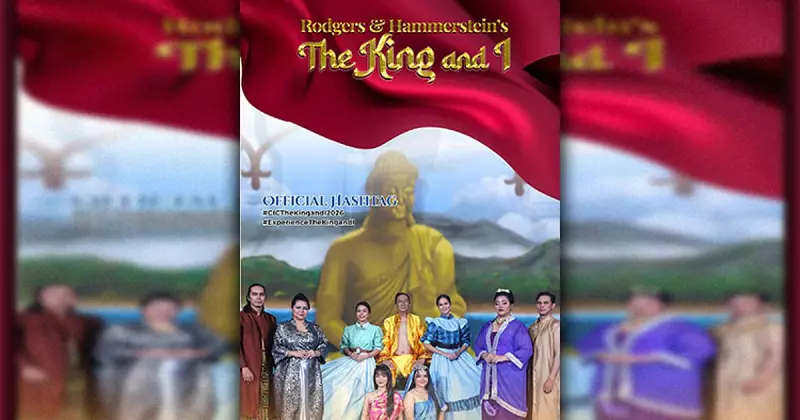
Colegio de la Inmaculada Stages 'The King and I' with Emphasis on Cultural Authenticity and Human Values
In a world where artistic reinterpretations often dominate, some stories stand the test of time not through radical change, but by preserving their deeply human truths. This philosophy lies at the heart of Colegio de la Inmaculada's (CIC) latest theatrical endeavor: a production of the Rodgers and Hammerstein classic, The King and I. Directed by veteran theater maestro Benjie Diola, whose five decades of experience in the performing arts inform a nuanced and historically aware approach, the staging demonstrates how timeless narratives can resonate with contemporary audiences while honoring their cultural roots.
Fidelity to a Classic: Balancing Tradition and Creative Expression
For director Benjie Diola, taking on The King and I was never about pursuing novelty for its own sake. Based on Margaret Landon's 1944 novel Anna and the King of Siam and set in 19th-century Siam, the musical possesses a structural integrity that demands respect. "There's a ceiling to what we can do," Diola remarked, emphasizing that the work's status as a classic comes with inherent limitations. "It's a classic for a reason." Instead of forcing unnecessary reinventions, Diola focused his creative energies on elements that allow for thoughtful reinterpretation: costumes, set design, lighting, choreography, and character development. These aspects, he believes, are key to making the story accessible and engaging for modern viewers without compromising its historical essence.
Cultural Responsibility in a School Setting
Staging a musical with such rich cultural and historical underpinnings in an educational environment carries a significant responsibility. Diola stressed that culture should be treated not as mere ornamentation but as living history. This principle applies equally to professional actors and student performers, guided by a commitment to accuracy and respect above all. To achieve this, Diola encouraged the cast to avoid imitating previous productions or the iconic 1956 film adaptation. Instead, he urged them to discover their own vocal and emotional interpretations, fostering a sense of ownership and authenticity. The choreography, too, was developed specifically for this staging, a discipline Diola has maintained throughout his extensive career in theater.

Bridging Cultures Through Shared Values
For the student performers, understanding the cultural context of The King and I was framed through the lens of shared human values rather than distant history. Diola highlighted parallels between Thai and Filipino traditions, such as gestures of respect toward elders and authority figures. "Things are done differently in various parts of the world," he observed, "but the values aren't worlds apart." These connections, he believes, enabled the cast to approach their roles with greater empathy and awareness, transforming cultural education into a relatable and meaningful experience.
Enduring Themes and Community Impact
Diola also pointed to the musical's enduring themes—leadership, the tension between tradition and progress, women's empowerment, education, and human rights—as reasons why The King and I continues to be revisited across generations and contexts. The production is part of CIC's performing arts program, with proceeds allocated to community engagement and recovery initiatives supported by the school and its partner institutions. "It is a carefully crafted musical experience," Diola concluded, "one that reflects how stories from different cultures can still speak to shared human values." Through this thoughtful staging, Colegio de la Inmaculada not only celebrates artistic excellence but also reinforces the power of theater to foster cultural understanding and social responsibility.