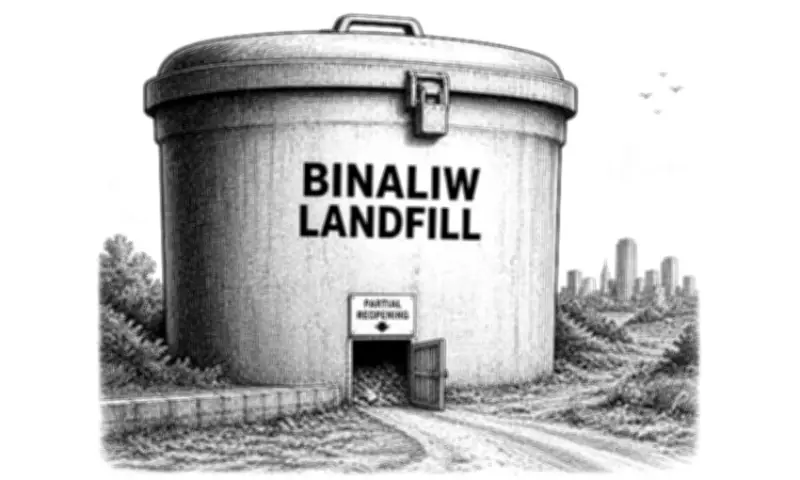
The Department of Environment and Natural Resources-Environmental Management Bureau (DENR-EMB) 7 has partially lifted the cease-and-desist order on the Binaliw landfill, prompting public questions about whether this decision will benefit Cebuanos or keep the site a threat to the environment and public safety.
Urgent Waste Management Needs
There is no denying the pressing need of Cebu City for a functional waste management facility. With a growing population and continuous urbanization, the volume of solid waste has also increased. The reopening, even if limited, of the Binaliw landfill may provide a temporary solution to avoid a waste crisis, such as overloading of transfer stations or illegal dumping of waste in other areas.
Safety Concerns Remain
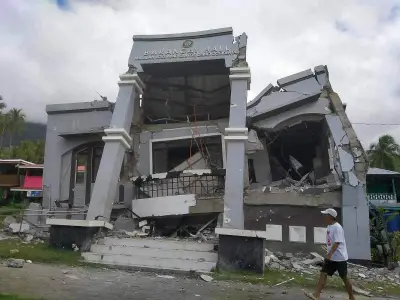
However, the landslide that occurred on January 8, which killed 36 people, remains a heavy warning about the dangers of improper landfill management. Even if the operator is now compliant with some requirements, public trust cannot be restored immediately. Community safety and environmental integrity must remain a priority over operational convenience.

The concept of a “partial reopening” itself indicates that rehabilitation is not yet complete. Operations are limited to a few engineered cells and under continuous monitoring. This means that the risk, although managed, still exists. If there are deficiencies in the implementation of mitigation measures—such as leachate control, slope stabilization, and waste volume regulation—the tragedy could be repeated.
Conclusion
Overall, the partial reopening of the Binaliw landfill may benefit Cebuanos in the short term by addressing the urgent waste problem. The real benefit will depend on the continuous, thorough, and transparent implementation of environmental standards.