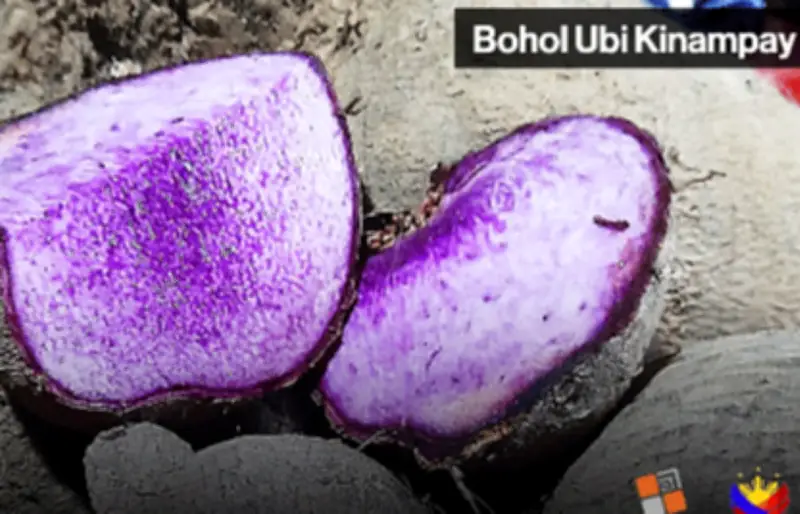
Bohol province is taking steps to enhance the market value of its iconic Ubi Kinampay, often called the “queen of Philippine yams,” by seeking geographical indication (GI) protection. The application, filed by the Provincial Government of Bohol through the Bohol Economic Development and Investment Promotion Office, aims to formally recognize the unique qualities and reputation of this purple yam, which are closely tied to the province’s geography, climate, soil conditions, and traditional farming practices.
Protecting Heritage and Identity
GI protection could help shield the product from misuse and false origin claims while boosting its competitiveness in the growing global market for ube-based products. The Intellectual Property Office of the Philippines (IPOPHL) welcomed the application, stating that GI protection can strengthen consumer confidence, increase market value, and support the livelihoods of farmers cultivating this heritage crop.
Bohol Ubi Kinampay is known for its naturally vibrant violet flesh, rich flavor, and distinct earthy aroma. It has long been regarded as the “queen of Philippine yams” and has gained popularity among local and international food manufacturers and culinary businesses.

Global Demand and Local Benefits
“The world is now in the middle of a ‘purple gold rush,’ and GI protection can help the Philippines stake its claim in the growing global demand by strengthening its market identity and position,” said IPOPHL Director General Teodoro C. Pascua. “As ube becomes more global, we must make sure the roots of varieties from the country are not lost. GI protection helps ensure that the true heart of the Bohol Ubi Kinampay—its soil, story and people—remain Boholano and Filipino.”
IPOPHL noted that GI registration can also help preserve traditional and organic farming methods that contribute to the yam’s distinctive color, texture, and aroma, amid concerns over the increasing use of synthetic fertilizers.
Evaluation Process
As part of the registration process, IPOPHL will evaluate the submitted Manual of Specifications, which details the product’s characteristics, production methods, quality standards, geographic production area, labeling rules, and evidence linking its unique qualities to Bohol’s natural environment and local know-how.
The application aligns with IPOPHL’s efforts to promote origin-based branding and encourage communities to leverage intellectual property rights to preserve heritage products and generate economic opportunities. In 2023, IPOPHL conducted seminar-workshops for producers of Bohol Ubi Kinampay and Alburquerque Asin Tibuok to help them understand the GI registration process and its potential benefits.
Second GI from Bohol
If approved, Bohol Ubi Kinampay would become the second protected geographical indication from Bohol after Alburquerque Asin Tibuok. The Philippines currently has four registered geographical indications: Guimaras Mangoes, Aklan Piña, Alburquerque Asin Tibuok, and Tau Sebu.