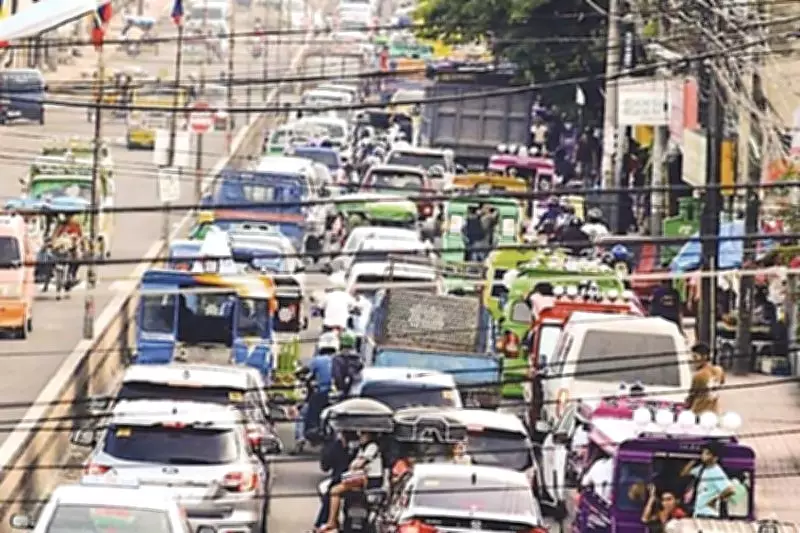
Cebu Governor Proposes Unified Truck Ban to Tackle Inflation and Logistics Delays
In a significant move to address economic pressures, Cebu Governor Pamela Baricuatro has proposed a unified truck ban schedule during a meeting with 14 Metro Cebu traffic managers on Tuesday, April 14, 2026. This initiative aims to combat inflation and logistics delays by harmonizing inconsistent local regulations that currently force delivery trucks to halt at city borders, thereby increasing transport and food costs across the province.
Inflation Crisis Drives Urgent Action
Data from the Philippine Statistics Authority (PSA) reveals a sharp rise in Cebu Province's inflation rate, which climbed to 9.1 percent in March 2026, up from 8.0 percent in February 2026 and 3.8 percent in March 2025. Central Visayas posted the highest regional inflation rate at 7.4 percent in March 2026, primarily driven by transport costs soaring by 9.9 percent and food and non-alcoholic beverage prices increasing by 3.0 percent. In Cebu, transport remains a key driver, with gasoline inflation at 22.2 percent and diesel inflation surging to 39 percent.
Governor Baricuatro emphasized that varying truck ban hours, penalties, and exemptions have created confusion and slowed the movement of goods, exacerbating the inflation crisis. "We agreed that we need to come up with a unified time for truck ban, as well as standardize penalties and exemptions," she stated in an interview on Wednesday, April 15, 2026. Presentations from local government units, ranging from Sibonga to Danao City, highlighted inconsistent schedules that disrupt supply chains.

Patchwork of Regulations Worsens Traffic and Costs
Currently, a patchwork of truck ban policies exists across Metro Cebu:
- Sibonga, Compostela, Danao City, and Carcar City have no truck ban policies.
- Cebu City, Lapu-Lapu City, Mandaue City, Talisay City, Minglanilla, Cordova, Consolacion, City of Naga, and San Fernando implement their own restrictions.
This lack of uniformity results in trucks being allowed in one jurisdiction but restricted in another, forcing drivers to wait along roadsides for bans to lift and worsening traffic congestion. "We have to come up with a unified time for truck ban. Maluoy sab ta sa truckers (Let's pity the truckers). This is bureaucracy at its best here," Baricuatro added, underscoring the human and economic toll.
Disparities in Penalties and Exemptions
The meeting also exposed wide differences in penalties and exemptions:
- Penalties range from a P5,000 fine for third offenses in Talisay City to P2,000 per violation in Mandaue City and P500 for first-time offenders in the City of Naga.
- Exemptions vary, with some LGUs allowing trucks carrying essential goods such as rice, perishables, livestock, and petroleum products, as well as government and emergency vehicles.
- Others extend exemptions to private contractors of government projects, while Lapu-Lapu City requires logistics firms to secure permits instead of granting automatic exemptions.
Provincial Board Member Stanley Caminero noted that crafting a province-wide ordinance is "sensitive but doable," given that LGUs already have their own policies and enforcement systems. Talisay Traffic Operations and Development Authority head Jonathan Tumulak highlighted Talisay City's role as a key access point for vehicles traveling between northern and southern Cebu and Cebu City, handling heavy traffic volume daily.
Broader Economic Impact and Mitigation Efforts
Assistant Provincial Administrator Aldwin Empaces pointed out that multiple fees imposed along the supply chain—from entry to delivery—have contributed to rising prices. "The target of the meeting is how to mitigate the crisis," he said, noting that inflation in Central Visayas has reached nearly eight percent. Maria Theresa Sederiosa, Industry Development Chief of the Department of Trade and Industry in Central Visayas (DTI-7), added that the agency has been urging logistics stakeholders to help address rising commodity prices.

Harmonizing logistics regulations is among the key measures identified, alongside a long-term proposal to establish a national agency for logistics. The provincial government continues to hold consultations with logistics stakeholders and traffic managers as part of its mitigation efforts. A consolidated proposal is expected on April 28, 2026, which may lead to an executive order or provincial ordinance standardizing truck ban policies across Metro Cebu, aiming to streamline operations and reduce inflationary pressures.