Davao del Sur Inaugurates ₱7M Hanging Bridges to Transform Remote Communities
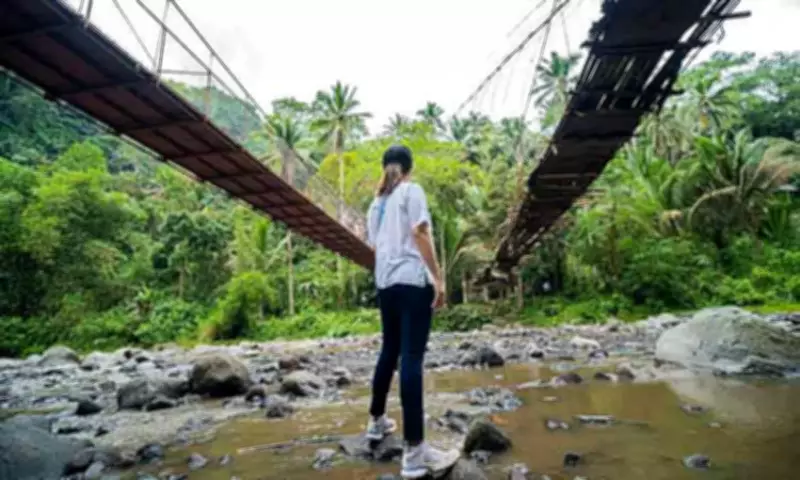
For years, residents in geographically isolated and disadvantaged areas (GIDAs) have faced immense challenges in accessing vital services, particularly in communities separated by rivers and streams where crossing becomes nearly impossible during continuous rains and flooding. Among these are the remote sitios of Dariango and Landig Dos in Barangay Sibulan, Sta. Cruz, where crossing often risked the safety of people and their transport animals.
Bridging the Gap for Safer Access
In response, the Provincial Government of Davao del Sur, under the leadership of Governor Yvonne R. Cagas, has allocated funding for hanging bridge projects, with two bridges worth nearly ₱7 million officially turned over to their communities. These structures now provide safer and more convenient access for hundreds of residents, most of whom belong to the Bagobo-Tagabawa tribe, connecting them to essential areas such as schools, markets, health services, and neighboring barangays.
Reaching the Hardest Places with Dedicated Leadership
Davao del Sur 1st District Board Member Rey Q. Ayo, who traces his roots to the Bagobo-Tagabawa tribe, emphasized that infrastructure development in far-flung areas has long been a priority of the provincial government, from the time of former Governor Douglas Cagas to the present administration. He highlighted the Cagas family's consistent efforts in initiating projects to ease travel for constituents, noting that even reaching Sitio Dariango requires navigating muddy and slippery terrain, underscoring the pre-bridge challenges.

Engineering Against the Odds: A Two-Year Endeavor
Project engineer Susan Melchor detailed the immense logistical difficulties during the nearly two-year construction period. Transporting materials to the site was extremely challenging, with each sack of cement carried by horse at a cost of ₱60 and heavy plates requiring eight people to lift. Cables had to be dismantled and stretched, with laborers carefully carrying them every meter to the construction area, showcasing the contractor's perseverance.
A Community's Heartfelt Gratitude
Residents like Iza Mae Gomia expressed deep appreciation, viewing the bridges as symbols of government presence and genuine public service. She thanked Governor Yvonne Cagas for her dedication, noting that despite difficult conditions, the governor remained positive. Gomia also acknowledged the efforts of Board Members Rey Ayo, Aballe, and Sheila Cagas, who visited the sitio to witness its beauty, making the turnover ceremony a milestone moment for the community.
Why Bridges Matter: Economic and Human Development
Beyond convenience, infrastructure such as bridges plays a crucial role in economic and human development. According to World Bank reports, rural infrastructure investments significantly reduce poverty by improving access to markets, education, and health services. The Asian Development Bank similarly emphasizes that transport infrastructure enhances social inclusion by linking remote communities to essential services and economic opportunities. In GIDAs, safe crossings can determine whether children attend school regularly during rainy seasons.
The Philippine Development Plan also underscores infrastructure connectivity as a driver of regional growth, supporting inclusive development and disaster resilience. For indigenous communities like the Bagobo-Tagabawa, these hanging bridges mean safer passage during emergencies, faster access to medical care, and stronger integration with the broader provincial economy.
More Than Steel and Cable: A Symbol of Unity and Opportunity
While the two hanging bridges stand as physical structures of steel and concrete, for the people of Sibulan, they symbolize dignity, connection, and opportunity. In places where rivers once divided communities, pathways now unite them, making life easier, safer, and more convenient, as envisioned by the provincial government. For the hundreds of Davsuranons who cross these bridges daily, each step forward serves as a reminder that even the remotest corners of the province are not forgotten.