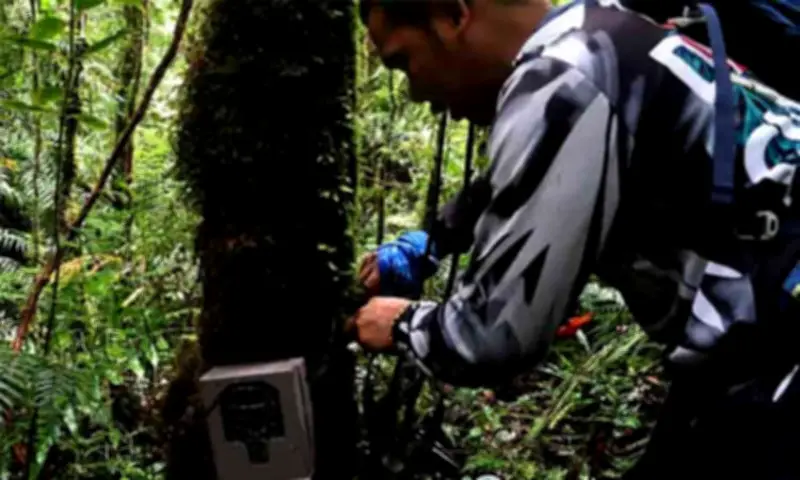
The Department of Environment and Natural Resources-Davao Region (DENR-Davao) has successfully captured images of elusive wildlife in the Mount Apo Natural Park (MANP) using newly deployed camera traps. Clint Michael B. Cleofe, officer-in-charge of the MANP Protected Area, stated that the technology has enhanced regular foot patrols by providing more precise estimates of wildlife occurrence and population trends.
Deployment and Findings
DENR-Davao deployed eight camera traps along the summit trails of Mt. Apo, the highest peak in the Philippines, which is also vying for UNESCO Global Geopark status. The traps were left in the field for 204 nights, capturing photos and videos of several species rarely observed during routine patrols. These include the Philippine warty pig (Sus philippensis), Philippine palm civet (Paradoxurus philippinensis), Mindanao tree shrew (Tupaia everetti), and red junglefowl (Gallus gallus).
Significance of the Sightings
According to DENR-Davao, these species retreat at the slightest sign of human presence, making them difficult to document through traditional methods. The unmanned monitoring technology allowed the MANP-Protected Area Management Office (PAMO) to confirm their presence. The department noted that the presence of these species reflects a healthy and resilient ecosystem, underscoring the rich biodiversity of MANP and the importance of sustained habitat and wildlife protection.

Conservation Implications
The data gathered will help assess ecosystem health and guide conservation management measures to address threats to habitats and wildlife. By increasing the number of camera traps, MANP-PAMO aims to build a more comprehensive wildlife database to support science-based management strategies. The use of camera traps is being promoted across all areas within the Asean Heritage Parks (AHP), positioning MANP as a pioneer in modernizing biodiversity monitoring and strengthening conservation networks.
Recent Rediscoveries
Earlier, DENR-Davao reported the rediscovery of Ophiorrhiza biflora, a rare flower last documented 122 years ago, found during the retrieval of camera traps in MANP. This endemic plant was first collected in the park in 1904 by American botanist Edwin Bingham Copeland. The rediscovery follows the documentation of another rare plant, Agalmyla calelanensis, in 2025, originally recorded in 1909.