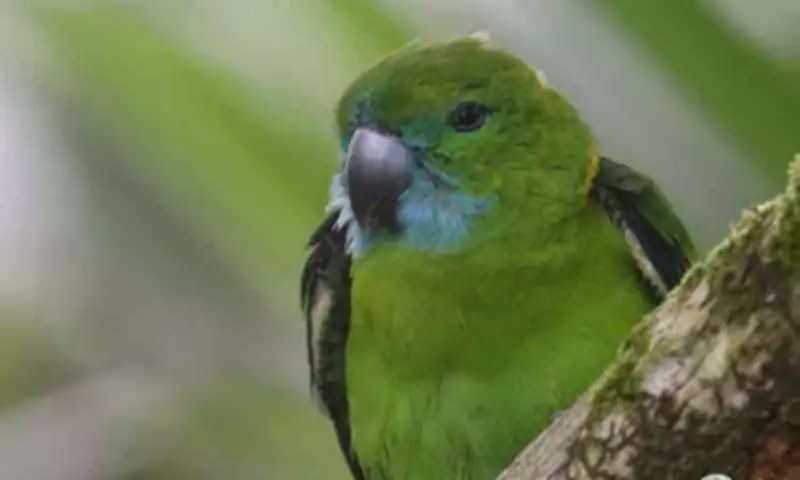
The Department of Environment and Natural Resources-Davao Region (DENR-Davao) has announced a significant ecological discovery with the documented presence of the Guaiabero (Bolbopsittaeus lunulatus), commonly referred to as the Philippine Hanging Parrot, within the Mainit Hot Springs Protected Landscape (MHSPL) located in Nabunturan, Davao de Oro. This finding underscores the region's vibrant natural heritage and ongoing conservation efforts.
Discovery Through Biodiversity Monitoring
The Guaiabero was identified during a comprehensive Biodiversity Monitoring System (BMS) survey conducted by staff from the Protected Area Management Office (Pamo). This small parrot, typically found in lowland and secondary forests, is easily recognizable by its striking green plumage, darker back, and wings with deeper shades. The bird's name originates from its dietary preference for guavas, reflecting its role in local ecosystems.
Ecological Significance and Endemic Status
Belonging to the monotypic genus Bolbopsittacus and the family Psittaculidae, the Guaiabero is closely related to lovebirds and is endemic exclusively to the Philippines. Despite its modest size, it plays a crucial role in forest regeneration by consuming fruits, flowers, and seeds, thereby aiding in the dispersal of plant species and supporting biodiversity.

In a statement released on March 11, 2026, DENR-Davao emphasized that the presence of the Guaiabero in MHSPL serves as a powerful reminder of the Philippines' rich biodiversity, particularly within Davao de Oro province. The department stated, "Protecting this small, but unique bird is part of a broader commitment to conserving the country's natural heritage and maintaining the balance of nature."
Conservation Challenges and Population Trends
According to online data, the International Union for Conservation of Nature (IUCN) currently lists the Guaiabero as "Least Concern," indicating that the species remains abundant and faces a low immediate risk of extinction in its natural habitat. However, BirdLife International reports a decreasing population trend, highlighting underlying threats that could jeopardize its long-term survival.
The primary dangers include habitat loss due to logging activities and agricultural expansion, as well as trapping for the pet trade, where the bird often suffers from low survival rates. These factors underscore the need for vigilant conservation measures despite its current IUCN status.
Broader Biodiversity and Collaborative Efforts
Rita Fe Gunn, the Provincial Environment and Natural Resources Office (Penro) Concurrent Protected Area Superintendent (PASU), noted that the latest BMS survey results confirm MHSPL's richness in biodiversity. She stressed the importance of sustaining protection and conservation efforts through collaborative initiatives involving all sectors of society.
In addition to the Guaiabero, the BMS monitoring team documented several other avian species, such as the Philippine Pygmy Woodpecker, Brahminy Kite, Philippine Serpent Eagle, and the Coleto. The presence of these diverse species further highlights the ecological value of the protected landscape and the critical need for ongoing environmental stewardship.