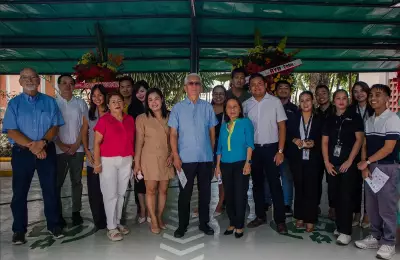
Grammy Award-winning artist Allan Pineda Lindo, known as Apl.de.ap, revealed that his interest in agriculture and environmental advocacy stems from his childhood experience with poverty in Pampanga. He shared this during the launch of the Handuraw Panaw Project in Cebu on Thursday, May 28, 2026.
Speaking at a press conference at a beach resort and spa, the artist recounted how his early life as the grandson of a farmer shaped his connection to agriculture, sustainability, and environmental protection. He recalled growing up without electricity, using lamps at night, hauling water to help his family, and working on the farm with his grandfather and their carabaos.
Apl also disclosed that he grew up legally blind and struggled in school before moving to the United States through an adoption support program, where he later co-founded the Black Eyed Peas. Despite his success in music, he said the COVID-19 pandemic prompted him to return to farming and environmental sustainability efforts.

The artist noted that his environmental advocacy deepened after learning about global soil degradation and sustainable farming practices. This led him and his team to explore biochar technology and agroforestry projects in the Philippines. According to Apl, their initiatives aim to help farmers generate additional income while improving soil quality and environmental sustainability through crops such as coconut, moringa, cacao, and coffee.
He added that many farmers remain invisible in the system, lacking access to technology and financial visibility despite being crucial to food production.
The Handuraw Panaw Project, in partnership with Omste Ventures, focuses on watershed restoration, environmental conservation, and community-based sustainability initiatives in Cebu. During the event, Handuraw Panaw Project steward Sarah Queblatin described the initiative as a leadership journey, a learning journey, and a living laboratory aimed at uniting communities, universities, environmental advocates, and local governments.
Queblatin said the project seeks to strengthen ecosystem leadership and promote collaborative environmental action through learning sites, agroforestry, watershed restoration, and sustainable community practices. She added that the initiative also aims to support existing environmental groups and develop partnerships focused on reforestation, biodiversity protection, and regenerative agriculture.