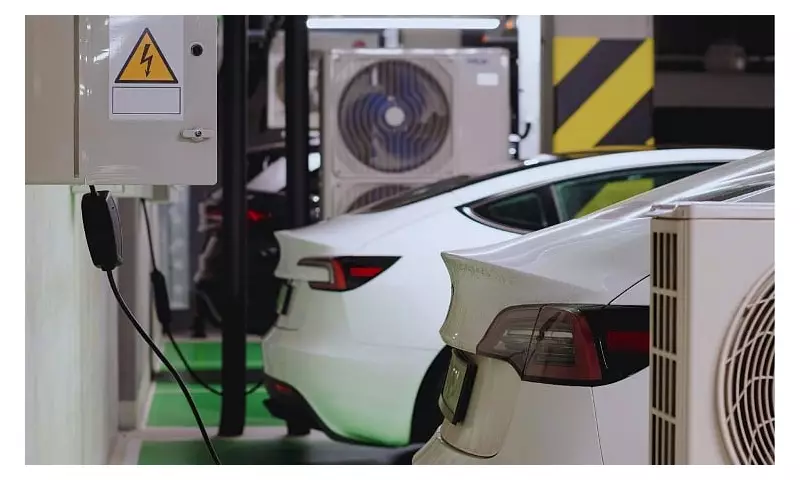
In a significant push to promote sustainable transportation, a Davao City councilor has filed a proposed ordinance designed to attract and support the electric vehicle industry within the city.
Targeted Incentives for a Green Economy
Councilor Temujin “Tek” Ocampo, who chairs the Committee on Environment, unveiled the proposal during the Pulong Pulong sa Dabawenyos on Monday, January 12, 2025. The measure seeks to provide a range of incentives to various players in the EV ecosystem.
The proposed ordinance would grant benefits to manufacturers, dealers, private and government users, operators, spare parts suppliers, charging station operators, and facilities dedicated to the environmentally sound disposal and recycling of batteries.

"Hopefully, we can pass this ordinance, but we still need to conduct a committee hearing to discuss it," Ocampo stated. He added that if no legal issues arise, the proposal will be forwarded to the plenary for approval.
Complementing Existing Code with Specific Provisions
Ocampo clarified that this new proposal is intended to complement the city's existing Davao Local Incentive Code. The latter was recently amended by Councilor Myrna Dolodo-Ortiz and is awaiting the executive department's signature.
He explained that while the incentive code is broad, his ordinance provides more detailed and specific provisions. "This will be a big help to our manufacturers and dealers," Ocampo emphasized in a mix of English and Cebuano. "Under the law, manufacturers are included here, as well as dealers and our suppliers, and an important component included is the recycling of batteries."
Detailed Tax Relief for Businesses and Recyclers
The proposed incentives are structured to offer substantial initial relief, tapering over time. Key provisions include:
- A 100 percent exemption from local business taxes and lease fees for the first three years of operation for EV recycling and repurposing facilities.
- A 75 percent reduction
- A 50 percent reduction
Additionally, those engaged in battery recycling would receive a 50 percent reduction in real property tax during their fourth and fifth years of operation. Ocampo said his committee would also work to ensure ease of doing business for all covered entities.
Addressing the Critical Battery Waste Issue
Councilor Ocampo stressed the environmental imperative behind the legislation. He noted that while electric vehicles are hailed as a green solution, their batteries remain toxic and can cause severe environmental damage if not managed correctly.
"The importance of having legislation in place for the proper recycling of electric vehicle batteries" is a cornerstone of the proposal, he said, highlighting the need for a responsible lifecycle for EV components.
Before the ordinance reaches the plenary, Ocampo's committee plans to conduct one or two more hearings to refine the details.
National Context: Surging EV Adoption
This local initiative aligns with a national trend of growing electric vehicle use. As of July 2025, EV registrations in the Philippines had climbed to 29,715 units, already surpassing the total 24,000 units registered in all of 2024. Projections suggest the number could reach 35,000 units by the end of 2025.
The national government has laid the groundwork through the Electric Vehicle Industry Development Act (EVIDA Law). This law provides an eight-year exemption from the number coding scheme, along with tax breaks and temporary zero-tariff incentives for manufacturers to spur investment and deployment across the country.
Davao City's proposed ordinance represents a localized effort to harness this national momentum, aiming to position the city as a leader in the sustainable transport sector while proactively addressing the associated environmental challenges.