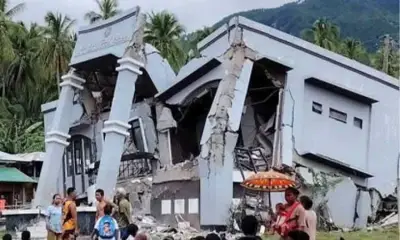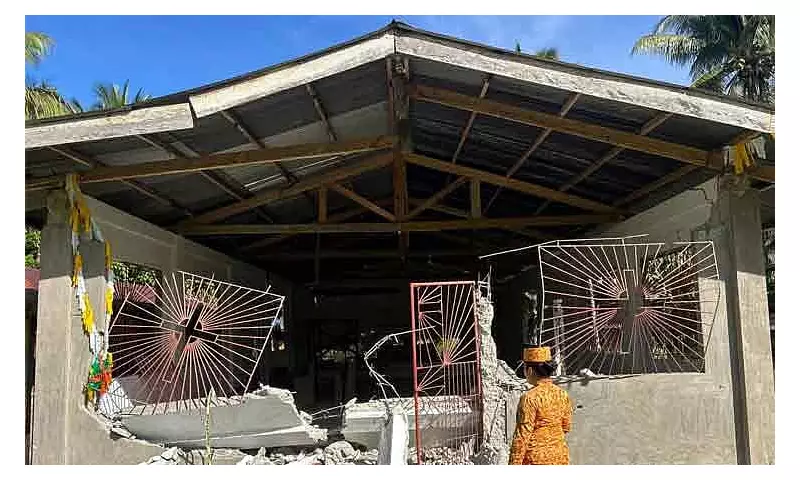
A powerful earthquake rattled the province of Davao Oriental earlier this week, causing damage to a local chapel but, fortunately, resulting in no reported injuries or casualties among residents.
Earthquake Details and Immediate Impact
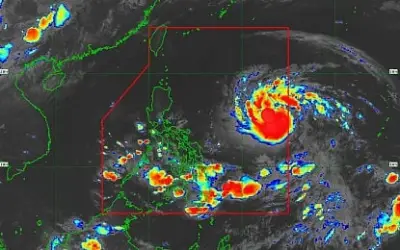
The tremor, with a magnitude of 6.4, struck the town of Manay on January 7, 2026. The Philippine Institute of Volcanology and Seismology (Phivolcs) recorded the quake's epicenter off the coast of Manay at a depth of 42 kilometers. The shaking was felt with varying intensity across the region and even in nearby areas.
According to Provincial Information Officer Atty. Lovella Fe Tacder, Manay experienced the strongest shaking at Intensity V. Several other towns, including Cateel, Baganga, and Caraga, felt Intensity IV tremors. The quake was also felt as far as Davao City (Intensity II) and Malungon, Sarangani (Intensity IV). Phivolcs assured the public that the event posed no tsunami threat.

Damage Assessment and Official Response
Initial assessments by authorities confirmed structural damage to one building: the Sr. San Lucas Chapel located in Sitio Balete, Barangay Santiaga, Caraga. The Bureau of Fire Protection is currently evaluating the full extent and cost of the damage to the chapel.
In a positive update, Tacder reported that as of 4 p.m. on January 8, there were no casualties, injuries, or internally displaced persons. She also confirmed that no government buildings or major infrastructure were damaged.
Strengthened Disaster Preparedness
Tacder highlighted that the province's disaster resilience efforts have been intensified following a double earthquake in October 2025. The focus has expanded beyond just reinforcing physical structures to improving overall community readiness.
"After the doublet earthquake, I believe the province has strengthened its disaster resilience advocacy," Tacder stated during a Regional Disaster Risk Reduction and Management Council briefing.
Looking forward, the provincial government is proposing the development of a disaster-monitoring application. This tool aims to help track calamities in real-time and swiftly identify areas that require assistance. Officials are targeting to launch the system within 2026.