Kanlaon Volcano Erupts with Two-Minute Explosive Event
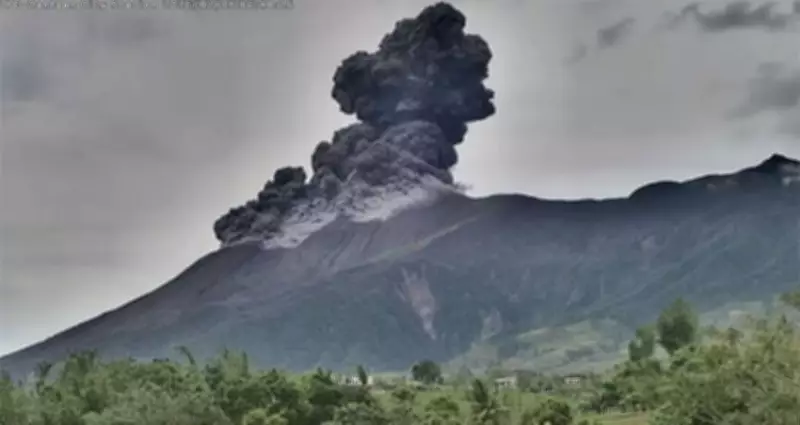
A short moderate explosive eruption occurred at the summit crater of Kanlaon Volcano on the afternoon of Thursday, February 19, 2026, according to the Philippine Institute of Volcanology and Seismology (Phivolcs). The eruption lasted approximately two minutes, beginning at 4:39 p.m., and generated a dense dark gray plume that rose about 2,000 meters above the vent before drifting southwest due to strong winds.
Hazards and Immediate Impacts
The eruption produced hazardous pyroclastic density currents (PDCs), hot volcanic gas, ashes, and fragmented rocks, which descended the upper slopes within one kilometer of the crater and extended at least two kilometers downslope on the southwest flank. Following the initial explosion, about 40 minutes of continuous ash emission was observed.
Phivolcs reported that the eruption generated a shock wave heard as a booming sound and felt more than 30 kilometers away. This shockwave was documented by an infrasound station about four kilometers southeast of the crater, with a pressure wave reaching a maximum of 225 Pascals.

Ashfall and Sulfurous Fumes Reported
Local authorities confirmed light to moderate ashfall in 41 barangays across six cities and municipalities in Negros Occidental. Sulfurous fumes were also observed in parts of La Carlota City, Bago City, and Moises Padilla, Negros Occidental, adding to the environmental and health concerns for residents.
Pre-Eruption Monitoring and Causes
Before the eruption, Phivolcs monitoring instruments detected 10 volcanic earthquakes, seven of which were low-frequency events linked to volcanic gas movement. Despite the explosion, overall seismic activity and gas emissions in the two weeks prior had been relatively low.
Sulfur dioxide emissions dropped to an average of 174 tonnes per day immediately before the eruption, while a short-term average of 752 tonnes per day was measured for the week. Since eruptive unrest began on June 3, 2024, the volcano has been degassing at an average rate of 2,823 tonnes per day.
Ground deformation data showed that the Kanlaon edifice has been slowly inflating since 2022 due to depths beneath the volcano and magma intrusion, with short-term inflation observed since late January 2026. Phivolcs indicated that these parameters suggest a blockage of volcanic gas pathways from deep magma sources, likely causing pressure buildup that triggered Thursday’s explosion—a mechanism similar to previous moderately explosive events since June 2024.
Current Status and Warnings
As of Friday, February 20, 2026, Phivolcs reported no significant increase in volcanic earthquakes or ground deformation following the eruption. However, Alert Level 2 remains in effect over Kanlaon, indicating moderate unrest.
Phivolcs warned the public that similar short-lived explosive eruptions might be followed by further moderately intensive activities. Ash emissions may still occur and could generate dangerous hazards within the four-kilometer Permanent Danger Zone (PDZ), disperse ash west of the volcano, and feed lahars along affected drainage channels.
The agency reiterated its recommendation for communities within the PDZ to remain evacuated due to threats from multiple hazardous volcanic activities. Residents in areas recently affected by lahars were urged to stay alert, especially for possible heavy rains that could remobilize loose ash and pyroclastic deposits into dangerous flows.
Local government units were advised to prepare their communities and residents within the PDC areas for immediate evacuation if volcanic unrest escalates further. Flying aircraft near the volcano remains prohibited. Phivolcs continues to closely monitor Kanlaon Volcano and will immediately relay any significant developments.