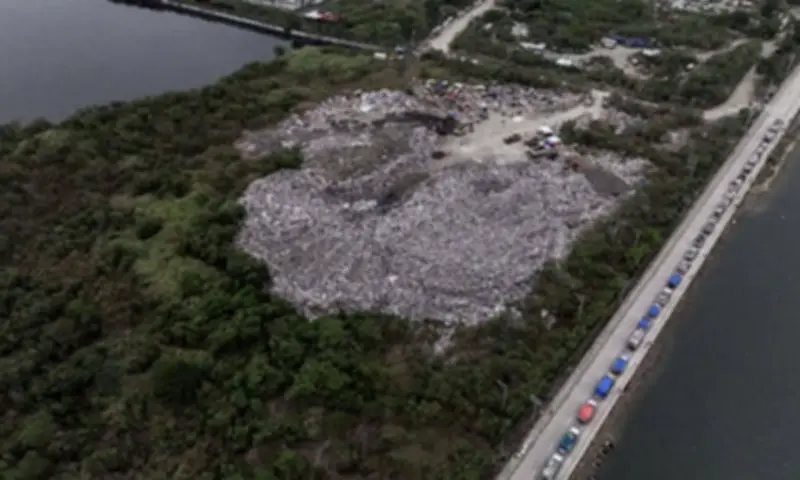
The Cebu City Government has been ordered to stop garbage-related operations at the South Road Properties (SRP) after environmental regulators found the area was being used as a garbage transfer station and dumping site without the permits required by law. It was given up to three months to remove the waste from the area.
Background of the Issue
The issue matters because SRP became part of the City’s waste management efforts after the landfill operations in Barangay Binaliw were stopped. According to the Department of Environment and Natural Resources (DENR) 7, environmental rules still apply even during a waste-management emergency, and violations could affect public health and the environment.
The question now is what Cebu City must do to comply with the order, which is effective immediately, and what happens to the waste already stored at the SRP.

Cease and Desist Order
The DENR’s Environmental Management Bureau (EMB) 7 issued a cease and desist order on June 7 after its investigation found that activities at the SRP went beyond what the site’s environmental permits allowed.
Rizalina Saberon, chief of the EMB 7’s Clearance and Permitting Division, said during a press conference on Thursday, June 18, that the City was called to a technical conference after inspectors found violations.
The EMB 7 had earlier denied Cebu City’s request to use Pond A at the SRP as a temporary garbage transfer station, saying the proposal posed environmental risks and did not comply with Republic Act (RA) 9003, the Ecological Solid Waste Management Act.
Reasons Why SRP Was Used
Waste was brought to the SRP after the landfill operations stopped at Prime Waste Solutions Inc. Cebu in Binaliw. The Binaliw facility was closed following a garbage-slide incident on Jan. 8 that killed 36 people.
According to Saberon, complaints about garbage accumulation at the SRP led regulators to investigate the site. The City did not immediately use the SRP as a waste transfer station. It was first dumped at a private landfill owned by Asian Energy Systems in Barangay Polog, Consolacion. The landfill later stopped accepting waste from Cebu City in February, reportedly due to payment issues and the lack of a memorandum of agreement. Afterward, the City turned to SRP’s Pond A as a temporary transfer station, where barangay trucks unloaded their waste and private haulers transported it to Aloguinsan.
Why the Probe Matters
According to the EMB 7, the SRP is not authorized to operate as a landfill, dumping ground, or waste transfer facility. Inspectors also found mixed waste at the site. Under RA 9003, solid waste must be properly segregated.
“The area is not a dumping site and based on reports, the wastes were mixed, which is not allowed. There should be proper segregation of solid waste,” Saberon said.
Facilities used for waste transfer, processing, or recovery must first secure environmental permits and comply with requirements under the Environmental Impact Statement System established by Presidential Decree 1586, according to the EMB 7.
What Cebu City Must Do
Saberon said City officials committed during the technical conference to remove the accumulated waste and bring it to a permitted disposal facility. The City was given 60 to 90 days to clear the area.
DENR 7 said it has been monitoring the cleanup and has observed garbage being hauled from the SRP, including shipments bound for Aloguinsan.
If Cebu City plans to establish a permanent materials recovery facility or waste-processing center at the SRP, it must first complete the required permitting process and obtain the necessary environmental clearances, it added.
Preventing Future Problems
DENR 7 Director Laudemir Salac said they have tightened project reviews following several controversies affecting the environment in recent years, including issues involving structures built within protected areas near the Chocolate Hills in Bohol. He said regulators are enforcing environmental and land-use rules more strictly to prevent similar problems.
Saberon said the DENR understands the challenges facing Cebu City’s waste management system but will continue requiring compliance with environmental laws. / CAV & BEJAY TABAYAG, BENEDICTO COLLEGE INTERN