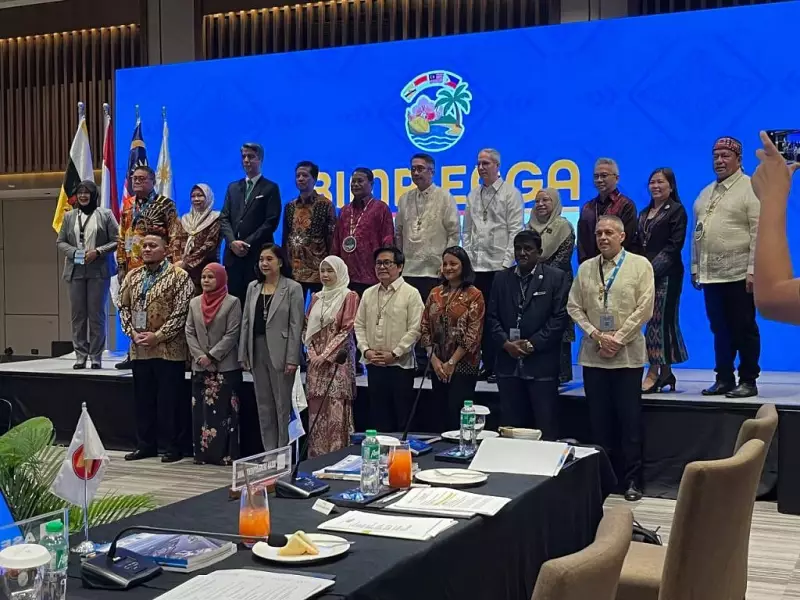
The Brunei Darussalam–Indonesia–Malaysia–Philippines East Asean Growth Area (BIMP-EAGA) has officially launched a comprehensive 10-year development plan designed to accelerate economic growth in Mindanao. The strategy focuses on three core pillars: empowering micro, small, and medium enterprises (MSMEs), strengthening local governments, and aggressively advancing the region's blue economy.
Local Governments Take Center Stage in Development Drive
In a significant shift, the subregional bloc has formally recognized local government units (LGUs) as the primary drivers of grassroots development. Mindanao Development Authority (MinDA) Secretary and BIMP-Eaga Philippine Signing Minister Leo Tereso Magno confirmed that senior officials and ministers approved a resolution cementing this new approach.
Magno emphasized that LGUs possess the deepest understanding of their communities' unique challenges and are therefore best positioned to initiate and lead development projects. "The discussion was very productive because the four countries renewed their commitment to empower not only MSMEs but also the local government units," Magno stated. He highlighted the resolution's core principle: development in any area must be led and initiated by the LGUs.

Beginning in 2026, MinDA will expand its collaboration with LGUs across Mindanao to ensure all development efforts are precisely aligned with local needs. The Asian Development Bank (ADB) has reaffirmed its support for these community-focused initiatives, particularly in Mindanao and Palawan.
Harnessing the Blue Economy for Sustainable Growth
A major component of the decade-long blueprint is a strong emphasis on the blue economy. This involves sustainably harnessing marine resources for food security, clean energy, and livelihood creation. MinDA deputy executive director Asec. Romeo Montenegro explained the holistic vision behind this focus.
"We wanted to be able to have a framework that anything we take advantage of in terms of marine resources, we don't look at it solely from an economic standpoint but also through the lens of sustainability," Montenegro said.
To turn this vision into reality, the ADB has earmarked $400 million for marine-related initiatives. This funding will support technical studies and potential projects in several cutting-edge areas:
- Floating solar energy installations
- Tidal and wave energy generation
- Advanced ocean technology
- Sustainable fisheries for sardines, tuna, and seaweed
Mindanao's Islands Identified as Pilot Sites
Mindanao's abundant marine environment makes it an ideal testing ground for these blue economy projects. Island provinces such as Basilan, Sulu, Tawi-Tawi, Dinagat, and Balut Island have been identified as proposed pilot sites for blue energy initiatives.
This focus is driven by a clear need. In 2023, scoping missions conducted by MinDA and ADB in Dinagat and Balut Islands revealed strong potential for solar and tidal energy. These renewable sources are seen as vital alternatives to the diesel-powered electricity that still dominates many isolated island communities, a major factor driving up power costs for residents.
With this 10-year plan, BIMP-EAGA aims to position Mindanao as a hub for inclusive growth and sustainable innovation. By empowering MSMEs, placing LGUs at the steering wheel of community development, and unlocking the potential of the blue economy, the plan also seeks to strengthen cooperation among the four member nations: Brunei, Indonesia, Malaysia, and the Philippines.