Lapu-Lapu City Bounces Back: Tourism and Business Resume After Storms
Following the recent weather disturbances brought by Typhoons Tino and Uwan, the Lapu-Lapu City Government has officially confirmed that all commodities and essential services for tourists and the business sector are now fully operational. This announcement provides a significant reassurance to visitors and local enterprises alike, signaling a swift and effective recovery for the island city.
Emergency Operations Deactivated, White Alert Status in Place
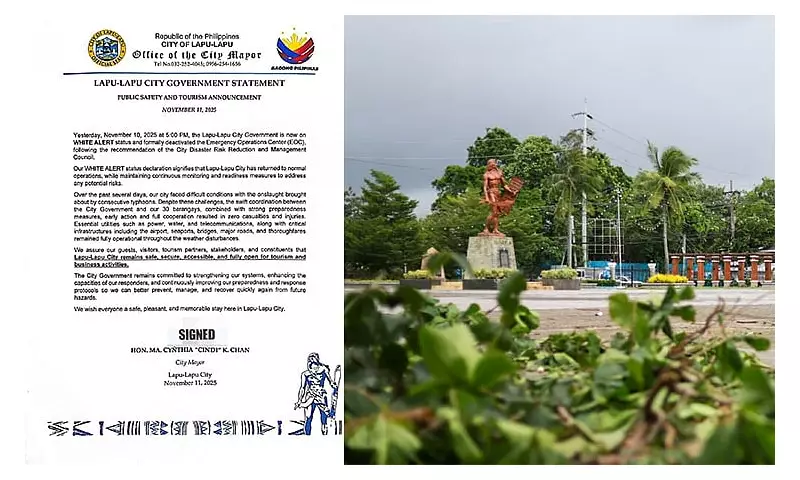
In an advisory issued on Tuesday, November 11, 2025, the City Government announced the deactivation of its Emergency Operations Center. This decision came directly from the recommendation of the City Disaster Risk Reduction and Management Council (CDRRMC). The local government's statement was clear and confident, emphasizing that Lapu-Lapu City remains safe, secure, accessible, and fully open for tourism and business activities.
Further cementing the return to normalcy, the city was placed under a white alert status on November 10 at 5 p.m.. While this signals that standard operations have resumed, authorities have stressed that monitoring and preparedness efforts continue. This ensures a swift response capability should any potential risks emerge in the future.

Essential Services Withstood the Storms
The consecutive typhoons presented considerable challenges, but the local government reported that key utilities and infrastructure demonstrated remarkable resilience. Throughout the duration of the storms, essential services such as power, water, and telecommunications remained functional. Crucially, key infrastructure like the Mactan-Cebu International Airport, seaports, bridges, and major roads also stayed operational, preventing major disruptions to travel and commerce.
In a testament to the effectiveness of their disaster management protocols, officials confirmed a highly positive outcome: zero casualties and injuries were reported. This successful result is attributed to early action taken by the authorities and strong cooperation from the community, highlighting a model of effective disaster risk reduction.