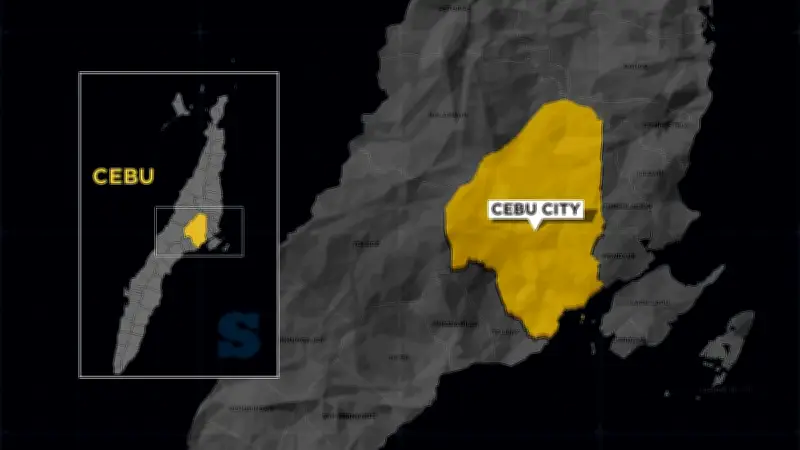
The Consulate General of the People's Republic of China in Cebu has formally opposed a proposed Cebu City resolution that would declare July 12 as "West Philippine Sea Victory Day," reiterating its stance that the 2016 arbitral ruling is invalid.
In a note dated Monday, June 22, 2026, the Chinese Consulate expressed its "gravest concern and firm opposition" to the proposed measure. It described the landmark arbitration as "a political farce disguised in legal clothing" and argued that the dispute between China and the Philippines primarily involves territorial sovereignty and maritime delimitation, issues it said fall outside the jurisdiction of the United Nations Convention on the Law of the Sea (Unclos).
Resolution Details
The resolution, authored by Cebu City Councilor Pablo Labra II, seeks to commemorate the Philippines' 2016 arbitral victory under Unclos, affirm support for the country's sovereign rights and maritime entitlements in the West Philippine Sea, and urge Congress to institutionalize the annual observance nationwide.

Rebuttal from Institute for Maritime and Ocean Affairs
The Chinese Consulate's position drew a point-by-point rebuttal from the Institute for Maritime and Ocean Affairs (Imoa), which stated that no state publicly supports China's claim of sovereignty, sovereign rights, and jurisdiction over maritime areas enclosed by its so-called nine-dash, now 10-dash, line beyond what is permitted under Unclos.
Imoa said the European Union, the United States, Canada, Australia, Japan, South Korea, India, New Zealand, Indonesia, and numerous other countries recognize the July 12, 2016, arbitral award as final and binding on both the Philippines and China. The institute noted that the tribunal's central ruling rejected China's claim of historic rights under the nine-dash line as a legal basis for claiming waters and marine resources in the South China Sea.
Clarification on Tribunal's Jurisdiction
Imoa clarified that the arbitral tribunal did not rule on territorial sovereignty over islands and reefs, noting that such matters are governed by general international law rather than Unclos. Instead, the tribunal determined the maritime entitlements generated by those features, which fall within the scope of the convention.
The institute also rejected China's assertion that the case involved overlapping exclusive economic zones (EEZs) requiring maritime delimitation. It said the tribunal found no overlapping EEZs between the Philippines and China because China's coastline, measured from Hainan Island, lies about 480 nautical miles from the Philippine coastline measured from Luzon, leaving high seas between their respective 200-nautical-mile EEZs.
China's Participation and Costs
Imoa likewise disputed China's claim that international institutions had distanced themselves from the arbitral ruling. It said the award was issued by an independent arbitral tribunal constituted under Annex VII of Unclos, while the Permanent Court of Arbitration served only as the tribunal's administrative registry.
The institute also said that although China declined to participate in the proceedings and refused to pay its share of the arbitration costs, Annex VII of Unclos allows one party to shoulder the full expenses if the other party declines to participate. Imoa added that by ratifying Unclos, China had already given its advance consent to compulsory arbitration under Articles 286 and 288 of the convention.