Filipino-Australian Community in Melbourne Unites for Cebu Typhoon Relief Through Charity Dinner
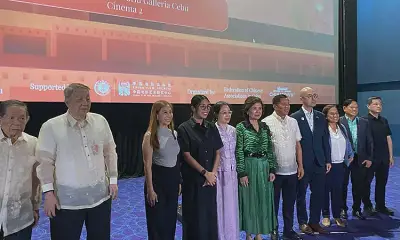
The Filipino-Australian community in Melbourne demonstrated remarkable solidarity on Monday, January 26, 2026, by gathering for a heartfelt charity dinner aimed at supporting the victims of typhoon Tino in Cebu. The event, aptly named "Sugba para sa Sugbo," was a collaborative effort organized by Epic in partnership with Kumbira Café & Grill, a beloved Filipino restaurant owned by spouses Rene and Archie Manuel. Adding a personal touch to the occasion, the evening also celebrated Rene Manuel's birthday, transforming a private milestone into a powerful collective act of generosity and compassion.
Diplomatic Presence and Culinary Excellence Enhance the Event
The gathering was graced by the presence of Jesus R. S. Domingo, the Philippine consul general in Victoria, Australia, who not only attended but also delighted guests by performing a song, infusing the event with warmth and cultural resonance. This diplomatic participation underscored the strong ties between the Filipino diaspora and their homeland, reinforcing the spirit of community support.
Culinary highlights of the evening showcased Filipino flavors presented with a refined, Western-inspired touch, culminating in a curated selection of petite desserts expertly prepared by chefs Jose Miguel Lontoc and Miguel Vargas. Their collaboration for this cause highlighted how food can serve as a bridge for humanitarian efforts, blending tradition with innovation to create a memorable dining experience.

Fundraising and Reunion: A Dual Purpose
According to organizer Sam Alcordo, the proceeds from the charity dinner will be channeled through Angat Buhay, a trusted partner organization in Cebu dedicated to assisting typhoon victims. Beyond its primary fundraising goal, the evening also served as a quiet reunion, allowing attendees to reconnect with old friends. For many, including those from the late-1980s Melbourne community, such as spouses Rudy and Nelba Alcordo and Walter Villagonzalo, the event proved that time and distance do little to diminish shared roots and enduring bonds.
Metro Cebu's Urban Crisis: A Call for Decongestion and Climate Resilience
As the Filipino-Australian community extends support from abroad, Metro Cebu faces pressing local challenges that demand urgent attention. The region is running out of room—not just on its congested roads, but in its strategic options for sustainable development. This discussion follows up on previous analyses, highlighting that Metro Cebu's problems can no longer be dismissed as mere growing pains.
Structural Issues and Land Use Failures
The traffic congestion, frequent flooding, heat stress, and declining urban livability in Metro Cebu have evolved into structural conditions, resulting from years of land use decisions that prioritized short-term growth over long-term balance. For an extended period, Cebu City has shouldered the burden of the entire metropolis, hosting the majority of employment opportunities, higher education institutions, hospitals, ports, and government offices. Meanwhile, surrounding local government units (LGUs) absorb housing without equivalent economic activity, leading to a daily ritual of mass inward migration in the morning and outward migration at night.
Urban planner Joseph Michael Espina has proposed a "Conceptual Land Use Strategy to Decongest the Urban Core and Strengthen Climate Resilience," arriving at a critical juncture. His proposal underscores an inconvenient truth: congestion is not primarily a transport failure but a land use failure. Compounding this issue, Cebu City is grappling with a garbage crisis following the closure of the Binaliw Sanitary Landfill due to a collapse, described by some as a "trash slide." Except for Consolacion, Cebu, other LGUs have denied Cebu City's requests to dump garbage at their landfills, exacerbating the waste management dilemma.

Linking Decongestion to Climate Resilience
What sets Espina's proposal apart is its explicit connection between decongestion and climate resilience. Overconcentration in the urban core, particularly in low-lying and reclaimed areas, has increased flood exposure and heat accumulation. Simultaneously, poorly regulated upland development has weakened watersheds that once absorbed rainfall and moderated floods. Metro Cebu is thus stressed from both ends—coastal areas hardened by reclamation and uplands stripped of natural buffering capacity. These are not natural disasters but policy outcomes that require immediate redress.
Planned decentralization, through the development of secondary urban centers with jobs, services, and housing, offers a viable solution. This approach reduces daily travel demand, spreads economic opportunities, and aligns growth with environmental limits. It represents not anti-development but development that acknowledges geography, risk, and reality.
Historical Vision and Governance Challenges
Reflecting on decentralization, the late former Bogo City mayor Junie Martinez once envisioned positioning Bogo City as an alternative call center hub. This vision aimed to ease the heavy concentration of such industries in Cebu City while providing livelihood opportunities for his constituents and allowing Bogohanons working in Cebu City to return home to their families. However, this dream was hampered by unreliable telecommunications infrastructure and ultimately put on hold after his untimely passing. Whether this vision will be revived now rests with his successors, including Mayor Maria Cielo Martinez, Vice Mayor Carlo Martinez, and Provincial Board Member Tining Martinez, should they choose to carry forward his legacy.
The core problem in Metro Cebu is not a lack of plans but a lack of discipline to implement them. Comprehensive land use plans are frequently amended to suit immediate commercial interests, reclamation projects advance despite unresolved environmental concerns, and LGUs often plan in isolation despite Metro Cebu functioning as a single, interconnected urban system. Espina's strategy implicitly calls for stronger metropolitan governance—planning that transcends political boundaries and election cycles. Without this, decongestion efforts will remain fragmented, and climate resilience will stay a catchword rather than a tangible policy outcome.
Urgent Choices for a Sustainable Future
Metro Cebu is approaching a tipping point where traffic congestion imposes real economic costs, flooding threatens public safety and investor confidence, and climate risks exacerbate existing inequalities, disproportionately affecting the poorest communities. The choice is no longer between growth and restraint but between planned growth and untidy decline. Espina's proposal offers Metro Cebu an opportunity to treat land as a finite, fragile resource and planning as an act of responsibility to future generations. The pressing question remains: will Metro Cebu embrace proactive planning, or continue to pay for past mistakes?