Davao City Health Office Leads Launch of National Deworming Month in Local School
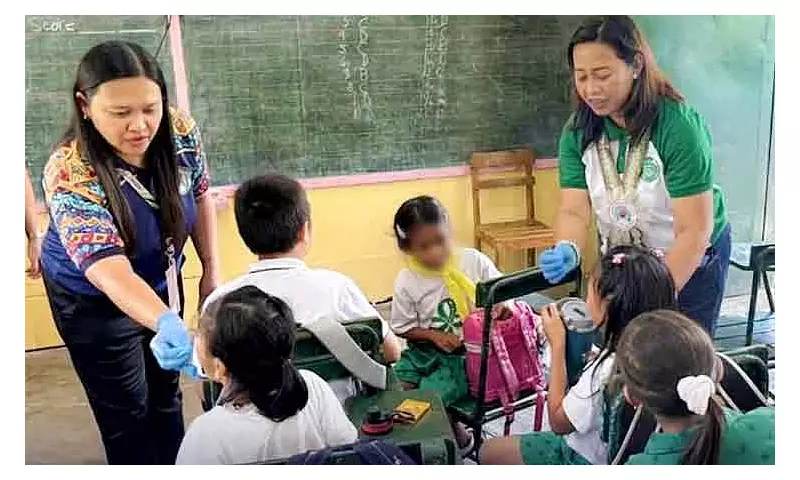
On Friday, January 23, 2026, the Davao City Health Office (CHO) spearheaded a significant public health initiative in partnership with the Department of Health (DOH), the Department of Education, barangay officials, parents, and teachers. The collaborative effort marked the official launch of the National Deworming Month at Barangay Balingaeng Elementary School, located in the Tugbok District of Davao City. This event underscores a concerted push to address parasitic infections among children through community-based interventions.
Community Support and Parental Endorsement Highlight Event
Abegail B. Ondang, a mother of two who actively participated in the activity, expressed strong support for the deworming program. She emphasized the tangible benefits it offers to her children, particularly in mitigating the adverse effects of parasitic worms on their health. "This is important so that they become healthy, the worms in their bodies are removed, or to prevent them from getting worms. I have proven that it is effective," Ondang stated, highlighting the program's proven efficacy in safeguarding child well-being.
Targeted Approach and Low Infection Rates in Davao City
Melodina Babante, the Focal Person for the CHO Tropical Disease Prevention and Control Unit, provided insights into the city's strategic approach. She revealed that Davao City has recorded an infection rate of less than one percent for Soil-Transmitted Helminthiasis (STH), a common parasitic condition. To maintain and improve this low rate, the initiative prioritizes children aged 5 to 19 years old. "Although we have deworming activities for 1-4 years old, but it is community-based," Babante explained, noting that the kick-off was held in elementary schools to align with the observance of the deworming month. The event included the distribution of deworming medicines to ensure widespread access.

Bi-Annual Observance and Educational Reinforcement
Irenn C. Mantilla, the DOH Program Manager for STH, clarified that while the deworming program is not new, launching it in schools serves a crucial educational purpose. "We saw the need to launch it in schools so the children would recall the activity," Mantilla said. The National Deworming Month is observed bi-annually, in January and July, reinforcing the importance of regular deworming to prevent health complications.
Health Risks and Parental Cooperation Emphasized
Babante further elaborated on the serious health risks associated with parasitic worms, urging parents to cooperate fully. "If a child has many worms inside the stomach, there is a possibility that the child can develop anemia and stunting. Weakness of the body of a child is also among the signs and symptoms of parasites inside their intestine, so they need to be dewormed twice a year," she warned. The CHO continues to monitor and provide interventions in barangays with high STH cases, despite the bi-annual program.
Call to Action for Parents and Communities
The initiative strongly encourages parents, teachers, and barangay officials to support deworming efforts in schools. "The parents are urged to support this program of the DOH. Without parental consent, the school cannot do anything, so we strongly encourage parents to do this for the welfare of their children—to help them become smarter and to prevent anemia and diseases caused by worms," Babante emphasized. This call to action aims to ensure high participation rates and maximize the program's impact on child health and development.
Preventive Measures Beyond Deworming
In addition to mass deworming, the public is advised to adopt preventive hygiene practices to avoid parasitic infections. Recommendations include:
- Regularly washing hands with soap and water.
- Observing proper use of toilets and maintaining sanitation.
- Reducing exposure to unwashed, undercooked, and uncovered food.
- Wearing slippers or shoes to minimize contact with contaminated soil.
These measures complement the deworming program, creating a holistic approach to combating parasitic diseases in Davao City and beyond.