Davao City Sees Dramatic 53.54% Decrease in Dengue Cases During 2025
The City Health Office (CHO)–Tropical Disease Prevention and Control Unit has announced a significant reduction in dengue cases across Davao City for the year 2025. According to their latest report, the number of documented dengue infections dropped by an impressive 53.54 percent compared to the previous year, marking the most substantial decline recorded since the dengue surge in 2010.
Sharp Decline in Cases and Fatalities
Melodina Babante, the focal person of the Tropical Disease Prevention and Control Unit, provided detailed statistics during the ISpeak media forum held on Thursday, January 29, 2026, at the City Mayor’s Office. She revealed that dengue cases fell from 7,175 in 2024 to just 3,325 in 2025. This positive trend extended to fatalities as well, with deaths decreasing from 56 in 2024 to 29 in 2025.
Babante highlighted the demographic breakdown of the cases:

- Most affected age group: Children aged five to nine years old.
- Significant cases also noted among the elderly, particularly those aged 60 and above.
- Gender distribution: 51.4 percent male patients, with the remainder female.
The barangays with the highest dengue cases in 2025 were identified as Bucana with 148 cases, Talomo Proper with 122, and Buhangin with 112.
Barangay Task Force Activation Drives Success
Babante attributed the remarkable decrease in dengue cases primarily to the activation of barangay mosquito-borne disease task forces. These task forces were established under Section 8 of City Ordinance No. 0401-20, series of 2020, and have proven effective in enhancing community-level prevention efforts.
She cited Barangay Talomo Proper as a key example. Previously lacking a task force, it often topped the list for dengue cases. However, after creating its own task force, the area saw a significant decline in infections. Babante emphasized that this approach allows barangays to take proactive measures rather than relying solely on the CHO, which previously led to delayed interventions.
Currently, only 72 out of Davao City’s 182 barangays have active task forces. To address this gap, the CHO is taking several steps:
- Scheduling meetings with two barangays in February 2026 to establish their task forces.
- Encouraging all barangays without task forces to create them promptly.
- Crafting a letter to the Department of the Interior and Local Government (DILG) requesting a memorandum mandating task force establishment while ordinance amendments are processed.
The components of a barangay mosquito-borne disease task force typically include:
- Barangay captain
- Chairperson on health
- Kagawad on environment and sanitation
- Health staff
- Barangay functionaries
- Sangguniang Kabataan (SK) members
- Private partners
Shift Towards Environmental Strategies
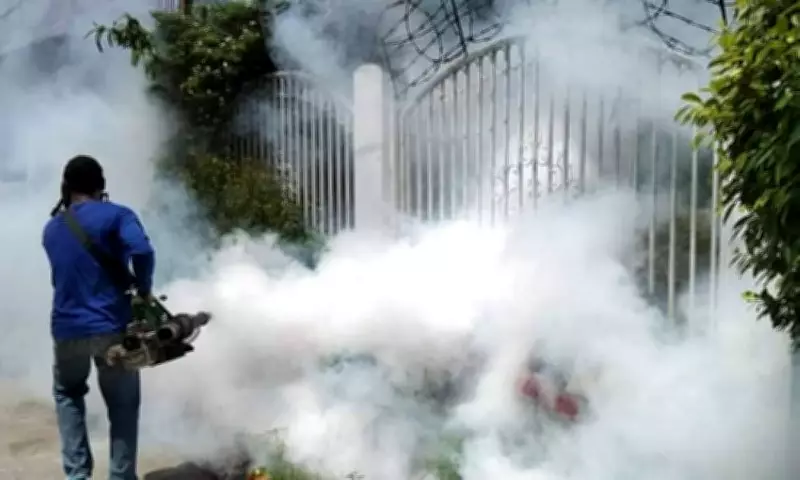
With the activation of these task forces, the CHO is now advocating for a move away from chemical interventions. Babante warned that methods like fogging and misting can lead to mosquitoes developing chemical resistance over time, rendering them ineffective.
Instead, she promoted the search-and-destroy method as the best approach to combat dengue. This involves:
- Cleaning areas where mosquitoes typically stay and lay eggs.
- Preventing mosquito multiplication through regular community clean-ups.
- Fostering sustainable environmental practices to reduce dengue transmission.
Babante expressed optimism for the future, stating, “Hopefully, today, with the help of our barangay mosquito-borne disease task force, our local government of Davao, and all the inter-agency task forces that belong to our mosquito disease task force, we can project that dengue cases this year will decrease.” This collaborative effort aims to build on the 2025 success and further reduce dengue incidence in Davao City.