POGS-SMC and Davao del Sur Provincial Hospital Provide Free Cervical Screenings and Prenatal Care to Hundreds of Women
For countless women residing in remote and underserved communities, accessing specialized healthcare services often involves arduous journeys, significant financial burdens, and postponed medical consultations. A recent community outreach initiative at the Davao del Sur Provincial Hospital directly addressed this critical gap, delivering essential women's health services directly to those most in need.
One-Day Medical Mission Draws Strong Community Response
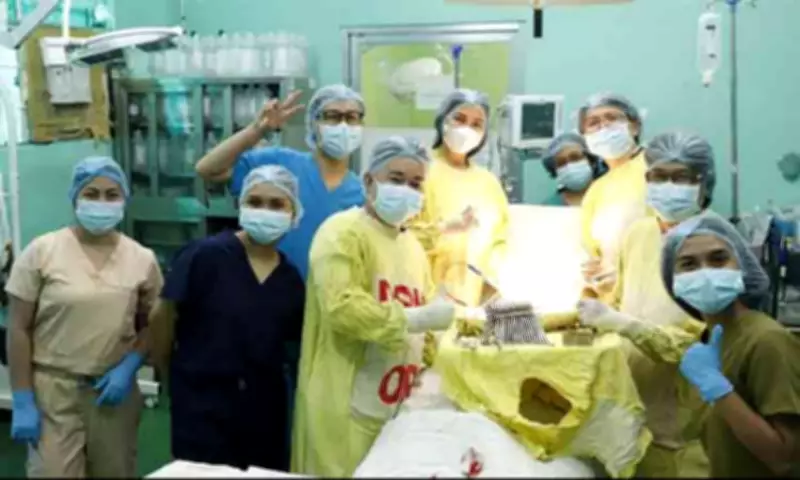
On April 18, 2026, the Philippine Obstetrical and Gynecological Society-Southern Mindanao Chapter (POGS-SMC), in a strategic partnership with the provincial hospital, executed a comprehensive one-day medical mission at the hospital's outpatient department. The event attracted a substantial number of beneficiaries from the surrounding areas.
Official records from the activity documented a robust community turnout. A total of 109 patients received Visual Inspection with Acetic Acid (VIA) screenings for the early detection of cervical abnormalities, coupled with thorough breast examinations. Prenatal check-ups were administered to 94 expectant mothers, while diagnostic ultrasound services were availed by 98 patients.

The outreach extended beyond these core services. Additional provisions included hemoglobin (Hgb) determination for 91 individuals, bone scans for 88 patients, and HIV screening for 31 people. Family planning services were provided to nine patients, and 205 beneficiaries received essential Department of Health (DOH) kits alongside other crucial medical support items.
The event was honored by the presence of Vice Governor Marc Cagas, who attended on behalf of Governor Yvonne Roña Cagas.
A Vital Advocacy for Underserved Populations
Dr. Cherry Joy Tabora, the POGS Community Service Outreach Program coordinator, emphasized the mission's foundational goals. "As part of the core mission of the Philippine Obstetrical and Gynecological Society, we conduct targeted community outreach programs to selected communities through our advocacy initiatives in underserved and vulnerable areas," she stated.
"These activities are designed to help women access specialized women's health services, facilitate early disease detection, address unmet surgical needs, strengthen collaborative health partnerships, and actively promote reproductive health awareness within the community," Dr. Tabora added.
A Crucial Intervention for Rural Women's Health
Programs of this nature carry immense significance in rural and geographically isolated regions, where consistent access to reproductive and maternal healthcare services remains uneven and often insufficient. According to data from the Department of Health, cervical cancer persists as one of the leading causes of cancer-related fatalities among Filipino women, a situation largely attributable to late-stage detection and limited screening coverage nationwide.
Global health insights from the World Health Organization further underscore that early screening methodologies like VIA are particularly critical in low-resource settings. These techniques enable immediate detection and prompt intervention, even in areas lacking advanced laboratory infrastructure.
Maternal health continues to represent another urgent concern. Reports from the Philippine Statistics Authority indicate that while maternal mortality rates have shown a decline over recent years, significant disparities persist between urban centers and rural communities. In these remote areas, access to consistent prenatal care and skilled birth attendants can be severely restricted.
In geographically isolated and disadvantaged areas (GIDAs), women frequently depend on intermittent medical missions or must undertake journeys lasting several hours to reach hospital facilities. Consequently, outreach programs function not merely as temporary service provisions but as vital lifelines, offering a consolidated setting for preventive care, early diagnosis, and essential health education.

Impact Extending Beyond a Single Day
According to Dr. Tabora, the value of such initiatives transcends the immediate numerical count of individuals served. By integrating screenings, medical consultations, and public health education, these missions help normalize the concept of preventive healthcare within communities where medical attention is traditionally sought only during acute emergencies or crises.
This initiative also actively fosters and strengthens collaboration between local government units, public hospitals, and professional medical societies. This collaborative model is strongly encouraged under the Philippines' universal healthcare framework, aiming to build more resilient and accessible grassroots health systems across the nation.
For the many women who queued at the outpatient department that day, the services rendered represented far more than routine medical checkups. They constituted rare and invaluable opportunities to access specialized care that might otherwise remain perpetually out of reach due to geographic, financial, or logistical barriers.
As POGS-SMC continues to expand and deepen its outreach efforts, the April 18 initiative powerfully underscores a broader, undeniable reality: in GIDAs and underserved regions, bringing comprehensive healthcare services directly to communities is not merely a matter of convenience; it is an absolute necessity with the profound potential to save and transform lives.