Japan Unveils Major Health Initiative for BARMM's Remote Island Provinces
The Government of Japan has officially launched a comprehensive health initiative targeting the Bangsamoro Autonomous Region in Muslim Mindanao (BARMM), with a specific focus on the remote island provinces of Basilan, Sulu, and Tawi-Tawi, collectively known as BaSulTa. This significant project represents a major international commitment to improving healthcare access in some of the Philippines' most challenging regions.
Formal Launch and Key Signatories
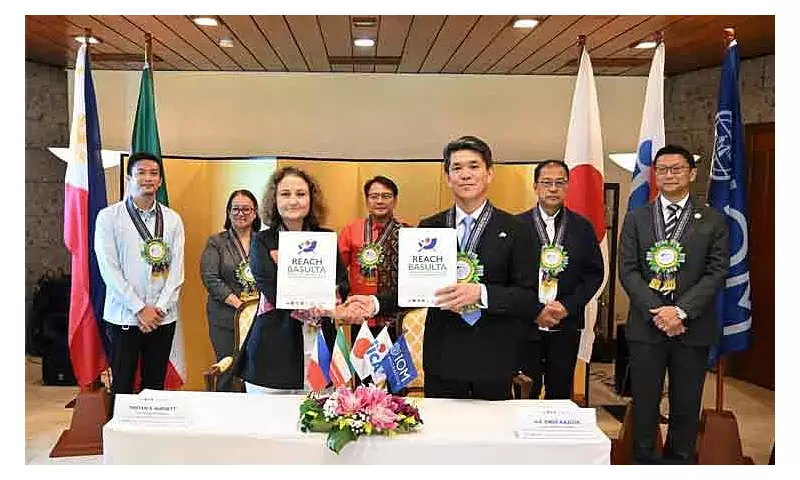
On January 22, 2026, Japanese Ambassador Endo Kazuya and International Organization for Migration (IOM) Chief of Mission Tristan Burnett formally signed and exchanged notes for what has been designated as "The Project for Strengthening Maternal and Child Health Services for Internally Displaced Persons on the Remote Islands of Conflict-Affected Areas." The signing ceremony was attended by numerous dignitaries including:
- Office of the Presidential Adviser on Peace, Reconciliation, and Unity (OPAPRU) Secretary Carlito Galvez, Jr.
- Department of Foreign Affairs (DFA) Deputy Assistant Secretary Maria Roseny Fangco
- Ministry of Health (BARMM) Minister Kadil Sinolinding, Jr.
- Department of Health (DOH) OIC-Director IV Joel Buenaventura
- Japan International Cooperation Agency (JICA) Philippines Chief Representative BABA Takashi
Substantial Financial Commitment and Project Scope
The Japanese government is providing a substantial grant assistance of five hundred and sixteen million Japanese yen (¥516,000,000), equivalent to approximately ₱205 million. This funding will be strategically allocated across multiple critical areas of healthcare infrastructure and service delivery.

The project will focus on three primary objectives:
- Upgrading existing health facilities to meet established standards
- Providing essential Maternal, Newborn, and Child Health (MNCH) equipment
- Implementing comprehensive technical training programs for healthcare workers
All improvements will be designed to meet both Basic Emergency Obstetric and Newborn Care (BEmONC) standards and PhilHealth accreditation requirements, ensuring sustainable quality healthcare delivery.
REACH BASULTA: A Comprehensive Approach
Dubbed REACH BASULTA (Resilient and Equitable Access to Care and Health in BASULTA), this initiative takes a multifaceted approach to addressing healthcare challenges in the region. The project specifically targets critical gaps in three key areas:
- Health facility readiness and infrastructure improvement
- Healthcare workforce capacity through specialized training
- Community awareness and engagement strategies
Special attention will be given to internally displaced persons and mobile populations within the BaSulTa provinces, recognizing their unique healthcare challenges and vulnerabilities.
Dual Strategy for Sustainable Impact
The REACH BASULTA project employs a two-tiered strategy designed to create lasting improvements in healthcare delivery. First, it strengthens the fundamental health systems through facility upgrades and workforce development. Second, it enhances community engagement through culturally sensitive health promotion campaigns and supports government-led PhilHealth registration drives.
This comprehensive approach aims to improve MNCH practices while expanding access to quality healthcare services for multiple vulnerable groups, including women, adolescents, caregivers, and displaced populations throughout the BaSulTa region.
Official Statements and Long-term Vision
In his official remarks, Ambassador Endo emphasized the project's broader significance, stating, "The project is a commitment to building a sustainable and resilient health system that prioritizes the well-being of all individuals." He further elaborated on the initiative's goals, adding, "By addressing the systemic gaps in health services, we hope to foster an environment where every mother and child has access to the care they need."

This Japanese-funded initiative represents a significant step toward addressing long-standing healthcare disparities in the BARMM region, particularly in the remote island provinces that have historically faced challenges in accessing quality medical services.