A Funeral Homily's Timely Lesson on Ethics in Crisis
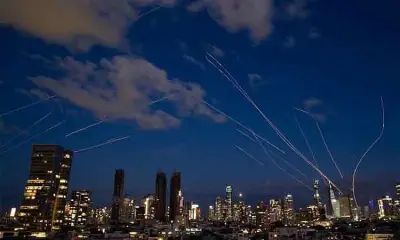
Last Friday, I delivered a homily during the funeral mass of my cousin, Sabino Dapat. In it, I recounted a conversation we had, not as a tribute—I had already paid that—but as a foundation for reflecting on principles that should guide our responses to the evolving crisis sparked by the war in the Middle East. This global turmoil demands more than reactive measures; it calls for a steadfast commitment to ethical frameworks that protect the most vulnerable among us.
A Cousin's Business Ethics During the Pandemic
As Covid-19 restrictions eased, I asked Sabino if his accounting firm had suffered from the virus's impact. He confirmed it had, but added a crucial detail: "I saw to it that the take-home pay of my employees was not negatively affected. I do not mind taking less, as long as those working would not be receiving less." This response resonated deeply, as it embodied two core principles of Catholic Social Teaching in a tangible way.
First, it reflected the principle, championed by the late Pope John Paul II, that capital should serve labor, recognizing workers as human persons with dignity. Second, it demonstrated an option for the poor, a concept popularized by liberation theology but rooted in biblical traditions. This aligns with the late President Ramon Magsaysay's insight: "Those who have less in life should have more in law." These principles are not mere ideals; they are essential guides, especially in times of crisis.

Why Crisis Demands Greater Commitment to the Vulnerable
In the face of today's Middle East war crisis, we cannot afford to set aside these ethical foundations. The question is not whether the State or Church must take sides, but whether our institutions are siding with the more vulnerable—farmers, fisherfolk, laborers, the unemployed, and the poor. Tragedies, whether natural or man-made, are not great equalizers. In events like earthquakes or floods, the wealthy are less vulnerable because their resources buy better protection and faster recovery.
This disparity extends to economic calamities, such as those influenced by global powers like the United States, Israel, and Iran. Thus, any measure to withstand this crisis must pass a litmus test: Is it pro-poor? Is it pro-labor? Without this focus, solutions risk exacerbating inequalities, leaving the marginalized to bear the brunt of suffering.
Concrete Application: The Jeepney Fare Dilemma
To illustrate, consider the debate over jeepney fares amid the crisis. Current rates are P13 for the first four kilometers and P1.50 for each additional kilometer. The typical framing pits two options against each other: halting fare hikes to protect drivers' take-home pay, or increasing fares and burdening commuters. However, this overlooks a key group: the operators.
Drivers often pay operators around P1,000 daily as a rental fee, known as a boundary. In this system, operators' incomes remain unaffected by fare changes, while drivers and commuters shoulder the risks. In an ideal scenario, the call for sacrifices should target operators first. Could they reduce their daily takings to alleviate pressure on drivers and passengers? This is not to assume all operators are affluent; some rely on bank loans and face financial strains. Here, banks could also contribute by renegotiating terms with operators.
Yet, many operators have paid off loans and enjoy net income, making them better positioned to absorb shocks. The point is to think creatively beyond fare hikes or suspensions. We must explore alternatives that distribute burdens more equitably, ensuring solutions prioritize human dignity over profit.
A Call for Creative, Compassionate Solutions
In conclusion, Sabino's example reminds us that ethics must guide our crisis responses. By embracing principles like the option for the poor and capital serving labor, we can forge policies that protect the vulnerable in the Middle East war fallout and beyond. Let us not limit ourselves to conventional choices but innovate with compassion, always asking: Does this measure uplift those with less in life? The answer will define our humanity in these turbulent times.