UP Diliman Scientists Advance Eco-Friendly Silver Nanoparticle Production with Gamma Radiation and Seaweed
In a significant breakthrough for sustainable nanotechnology, scientists from the University of the Philippines–Diliman College of Science (UPD-CS) have developed a greener method for synthesizing silver nanoparticles (AgNPs). This innovative approach utilizes gamma irradiation in combination with ι-carrageenan, a natural biopolymer derived from seaweed, to create antibacterial materials with reduced environmental impact.
Harnessing Radiation and Natural Stabilizers for Nanoparticle Formation
The research team, led by Mon Bryan Gili, Wendell Manuel, and Dr. Marienette Vega from the UPD-CS Materials Science and Engineering Program (MSEP), collaborated with Dr. Marlon Conato of the UPD-CS Institute of Chemistry (IC), along with Rakshith Gowda Shankaregowda and Dr. Manh-Huong Phan from the University of South Florida. Their work focuses on replacing traditional chemical synthesis with a more sustainable process.
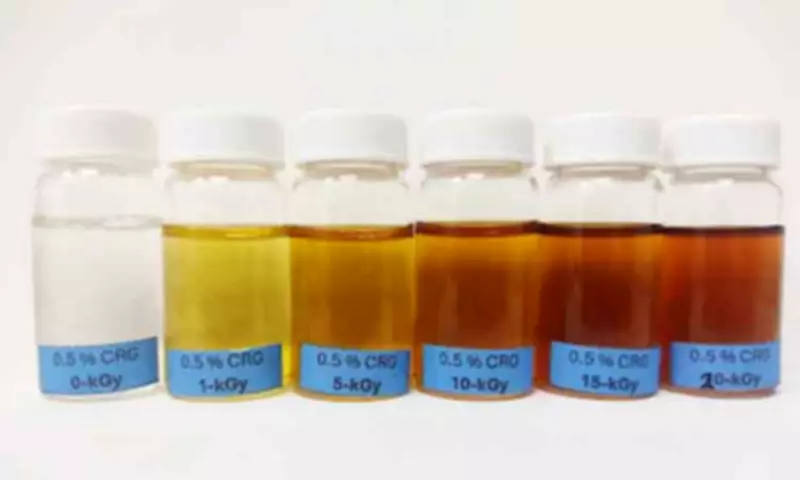
Gamma radiation serves as the primary agent for converting silver ions into nanoparticles, while ι-carrageenan acts as a stabilizer to prevent aggregation and ensure safety. As Gili explained, "We let radiation do the 'work' of forming the particles, while the seaweed extract keeps them stable and safe. We then tested how effective these particles are against common bacteria." This method results in a visible color change from colorless to yellow to brown, with darker hues indicating higher nanoparticle concentrations.

Advantages Over Conventional Chemical Methods
Compared to conventional approaches that rely on harsh chemicals, this gamma-radiolytic route offers several key benefits:
- Reduced Chemical Waste: Gamma radiation eliminates the need for toxic reducing agents and stabilizers, minimizing hazardous byproducts.
- Sterilization During Synthesis: The process inherently sterilizes the nanoparticles, which is crucial for medical applications like wound dressings or antimicrobial coatings.
- Simplified Processing: Fewer steps are required, leading to lower production costs and enhanced scalability.
Gili emphasized, "Overall, this means fewer processing steps, less chemical waste, and a safer product for both people and the environment." This advancement addresses growing concerns about antibiotic resistance and environmental safety, motivating the team to explore alternative production techniques.
Future Directions and Potential Applications
The researchers are now focused on optimizing their method for practical use. Key next steps include:
- Improving the long-term stability of the nanoparticles to ensure durability in various conditions.
- Testing the nanoparticles in real-world products, such as medical devices or consumer goods, to evaluate efficacy.
- Conducting safety assessments for human use to meet regulatory standards.
Gili expressed optimism about the technology's potential, stating, "Ultimately, we hope this technology can lead to affordable, locally produced antibacterial materials using Philippine natural resources and nuclear science expertise." This aligns with broader goals of leveraging indigenous resources for sustainable development.
Publication and Scientific Impact
The findings are detailed in the paper "Antibacterial evaluation of radiolytically synthesized silver nanoparticles with ι-carrageenan stabilizers," published in the journal Radiation Physics and Chemistry. This publication highlights the study's contribution to research involving ionizing radiation in physics, chemistry, and processing, underscoring its relevance to both academic and industrial sectors.
By integrating gamma irradiation with natural stabilizers, this research not only advances green nanotechnology but also positions the Philippines as a leader in innovative, environmentally conscious scientific solutions.