Canadian Leader Declares End of US-Led Global Order at Davos Forum
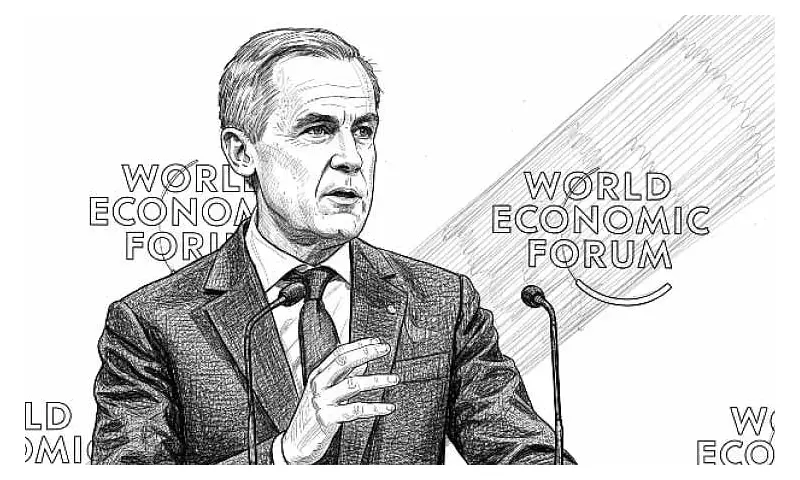
In a striking address that sent shockwaves through international circles, Canadian Prime Minister Mark Carney has proclaimed the definitive demise of the United States-led rules-based global order. The announcement came during his keynote speech at the prestigious World Economic Forum gathering in Davos, Switzerland earlier this week, where he delivered what many analysts are calling a historic and transformative statement on the current state of international relations.
A Bombshell Revelation About Western Hypocrisy
Political observers and foreign policy experts have described Carney's declaration as nothing short of explosive, particularly because it openly acknowledges what many Western analysts have quietly understood for years. The Canadian leader pointed out that the so-called rules-based system has primarily functioned as a convenient framework that Western nations have selectively applied only when it served their specific geopolitical and economic interests.
Carney drew upon the influential work of Czech philosopher and former president Václav Havel, specifically referencing Havel's seminal essay The Power of the Powerless. He argued that middle-ranking nations like Canada have long participated in what he termed the "ritual" of this international order, despite recognizing its fundamental flaws and inherent contradictions. The most significant of these flaws, according to Carney, has been the consistent pattern of great powers exempting themselves from the very rules they expect others to follow.

The Weaponization of Economic Integration
The Canadian prime minister warned that the era of quiet compliance has reached its conclusion, primarily because economic integration has transformed into a strategic weapon. He highlighted how nations now employ tariffs, coerced supply chains, and financial leverage as tools of geopolitical competition rather than instruments of mutual prosperity. This dangerous trend has accelerated as traditional multilateral institutions like the United Nations and World Trade Organization continue to weaken and lose their effectiveness in maintaining global cooperation.
Carney emphasized that countries now face increasing pressure to pursue what he called "strategic autonomy"—the ability to function independently in critical areas. He specifically identified three fundamental pillars of national resilience: the capacity to feed one's population, secure reliable energy sources, and maintain credible defense capabilities. However, he issued a crucial caveat, warning that if every nation retreats into isolationist "fortresses," the global community will inevitably become both economically poorer and politically more fragile.
Canada's Shift Toward Principled Pragmatism
In what represents a significant evolution in Canadian foreign policy, Carney announced a move away from traditional assumptions about geographic security toward what he termed "principled pragmatism." This new approach maintains an unwavering commitment to core values including national sovereignty, territorial integrity, and universal human rights while engaging with the world as it actually exists rather than as one might wish it to be.
The Canadian leader explained that this pragmatic framework acknowledges that national interests will frequently diverge and that meaningful progress often occurs incrementally rather than through dramatic transformations. He outlined Canada's intention to invest strategically in shared standards and resilient supply chains with like-minded allies, thereby reducing the economic and political costs associated with greater independence.
The Power of Honesty and Internal Strength
Carney asserted that genuine empowerment for middle powers must begin with unflinching honesty about the current international system's limitations. He urged nations like Canada to cease pretending that the old framework remains functional and instead focus their energies on constructing a new order anchored in practical resilience—the demonstrated ability to withstand external pressures and maintain national sovereignty.

Canada plans to lead by example through what Carney described as "calibrating" its international relationships based on shared values while simultaneously building internal strength across multiple sectors. This represents a deliberate shift away from over-reliance on traditional alliances toward a more balanced approach that prioritizes national capabilities alongside international cooperation.
Implications for the Philippines as a Middle Power
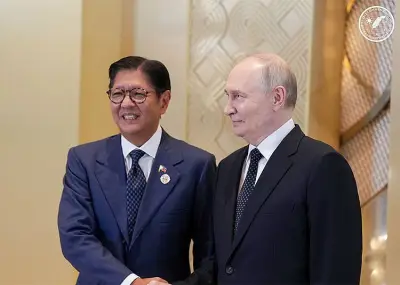
Carney's message carries particular significance for the Philippines, which occupies a similar position as a middle power within the Asian geopolitical landscape. His analysis suggests that the Philippines cannot afford to remain perpetually in the shadow of its former colonizer, nor should it automatically align its policies with those emanating from Washington simply out of historical habit or perceived obligation.
This does not imply severing ties with the United States, but rather developing a foreign policy that genuinely serves Philippine national interests rather than reflexively accommodating external preferences. The Philippines must move beyond what Carney identified as the dangerous illusion that compliance automatically guarantees security—a lesson that numerous nations have learned through painful experience.
Overcoming Colonial Mentalities
Many Filipinos have grown up internalizing a narrative of perpetual gratitude toward the United States, particularly regarding World War II liberation. This historical framing has sometimes translated into foreign policy approaches characterized by excessive deference rather than clear-eyed assessment of national interests. The challenge lies not in criticizing the United States itself, but in transcending what Carney's analysis indirectly highlights: persistent colonial mentalities that continue to influence decision-making processes.
The path forward requires concrete action across multiple domains. The Philippines must prioritize achieving genuine self-sufficiency in feeding its population, securing its energy needs, and developing credible defense capabilities. Simultaneously, it should actively cultivate new international partnerships based on mutual benefit and "win-win" cooperation rather than hierarchical relationships.
As Carney reminded the Davos audience through his reference to historical wisdom, while the powerful may do what they can, this reality does not obligate less powerful nations to passively accept whatever circumstances they inherit. The moment has arrived for middle powers worldwide—including the Philippines—to chart their own courses with clarity, pragmatism, and renewed commitment to national sovereignty.