Former Philippine Leader Duterte Boycotts ICC Hearing, Alleges Political Kidnapping
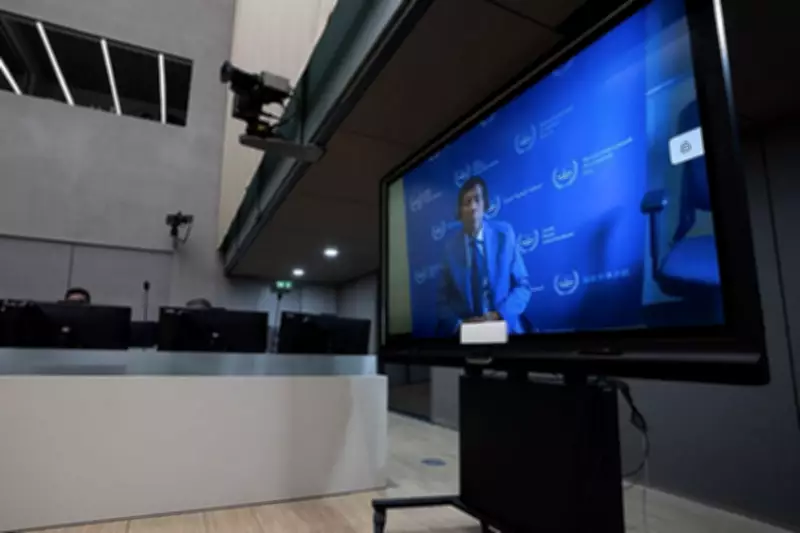
In a dramatic development at the International Criminal Court (ICC) in The Hague, Netherlands, former Philippine President Rodrigo Duterte has formally refused to attend the confirmation of charges against him, scheduled for February 23 to 27, 2026. The charges stem from his controversial anti-drug campaign, which critics allege involved widespread extra-judicial killings.
Duterte's Defiant Notification and Jurisdiction Challenge
In a signed notification dated February 17, 2026, the 80-year-old former leader waived his right to attend the hearing, entrusting his legal team to challenge the prosecution's evidence. Duterte explicitly stated that he does not recognize the jurisdiction of the ICC, framing his presence in The Hague as an unlawful abduction.
"I am a Filipino citizen forcibly pushed into a jet and renditioned to The Hague in the Netherlands in flagrant contravention of my country's Constitution and of national sovereignty," Duterte declared. "My kidnapping was facilitated by the office of the incumbent President of the Philippines with a plane specially chartered for this purpose."

Denial of Allegations and Emotional Appeal
Duterte vehemently denied accusations that he oversaw a policy of extra-judicial killings, labeling them as "an outrageous lie" propagated by political opponents whose credibility he claims has been discredited. Citing his advanced age and frail health, he expressed a desire for peace in his detention.
"I do not wish to attend legal proceedings that I will forget within minutes. I am old, tired, and frail," he said. "I wish for this Court to respect my peace inside the cell it has placed me. I have accepted the fact that I could die in prison. But those that desire this fate for me should know that my heart and soul will always remain in the Philippines."
He concluded with a patriotic affirmation: "I am proud of my legacy and of my service to my countrymen around the world. Let no one doubt my love for and loyalty to the Filipino nation."
Charges and Legal Context
Duterte, who was arrested in the Philippines in March 2025 and swiftly transported to the Netherlands, faces confirmation of serious charges, including:
- Murders in or around Davao City during his mayoral period, allegedly involving the Davao Death Squad
- Murders of high-value targets during his presidential term
- Murders and attempted murders in barangay clearance operations while president
Palace Rebuttal and Legal Justification
In a televised interview, Palace Press Officer Undersecretary Claire Castro firmly rejected Duterte's kidnapping claims. She cited Section 17 of Republic Act 9851, the Philippine Act on Crimes Against International Humanitarian Law, Genocide, and Other Crimes Against Humanity, which permits the government to defer to an international tribunal for cases already under investigation.
"Our fellow Filipinos were only able to file cases at the ICC because we remember that former President Duterte said he would not be arrested or jailed due to immunity," Castro explained. "Second, because of old age. He even said, 'I do not respect, I do not care about human rights.' If you heard that and knew the person who killed your relatives would not be jailed, would you still seek justice here in the Philippines?"
She emphasized that victims turned to the ICC due to a perceived lack of justice domestically, and the government has legally allowed the case to proceed internationally under RA 9851 since hearings have commenced.
Contradiction and Political Motivation Allegations
Castro also lamented Duterte's assertion that his transfer and detention are politically motivated, pointing to his earlier statement en route to The Hague where he took full responsibility for drug war killings. "Is he now denying his admission of having ordered killings, and instead placing the blame on the police, claiming that he had no involvement and was neither the mastermind nor complicit in the killings?" she questioned.

This high-profile case continues to unfold, highlighting deep divisions over accountability, sovereignty, and human rights in the Philippines' recent history.