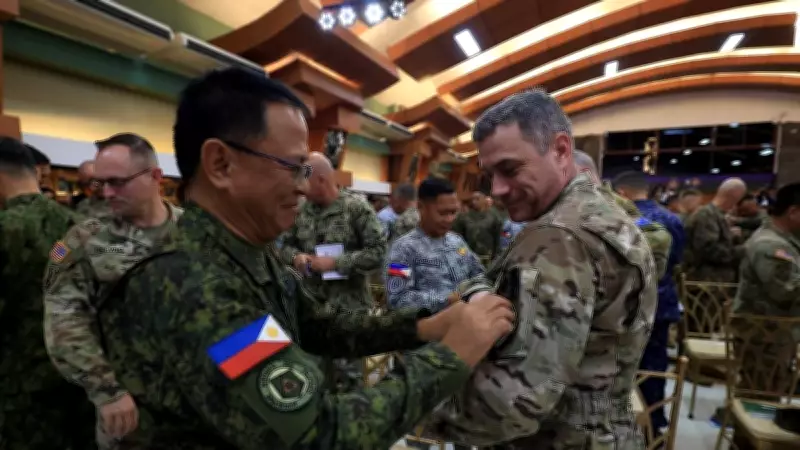
Several rights and advocacy groups have condemned the Balikatan, or "Shoulder to Shoulder," combat drills involving over 17,000 soldiers from allied nations, as global conflicts involving Iran and China escalate, and tensions rise in the West Philippine Sea.
Critics Warn of Direct Involvement in Conflicts
Lawyer and rights leader Aaron Pedrosa, secretary general of Sanlakas, a progressive coalition, stated: "This places us directly in the line of fire. The US-Iran War is a watershed moment to revisit the country’s military alliance with the US. It did not work for the Gulf States who were besieged with Iranian missiles, it will not work for us." He added that the alliance only serves US interests while Filipinos struggle economically.
Pedrosa called for the abrogation of the Mutual Defense Treaty (MDT), Visiting Forces Agreement (VFA), and Enhanced Defense Cooperation Agreement (EDCA), urging the Philippine government to pursue a genuinely independent foreign policy.

Progressive Groups Denounce Subservience
Renato Reyes Jr., president of progressive group Bayan, described the exercises as "a shameful display of subservience to US interests" at a time when US imperialism is causing global economic harm and war crimes in Iran. He argued that the exercises create an unfavorable atmosphere for peacefully resolving disputes with China.
The 19-day drills, described as the "biggest ever," began on April 20 and involve troops from the US, United Kingdom, Australia, Canada, France, Japan, and New Zealand.
US Officials Highlight Benefits
During the opening ceremony at Camp General Emilio Aguinaldo, US Charge d’Affaires Y. Robert Ewing emphasized that Balikatan reflects the dynamic alliance and strengthens collective ability to address regional and global challenges. He noted that the exercise includes Humanitarian Civic Assistance programs, such as building classrooms, health facilities, and multi-purpose structures with local partners.
In Tacloban City, Philippine Army personnel from the Artillery Regiment joined US Army medics in a three-day Tactical Combat Casualty Care training ending April 22. Captain Christopher Tataro, spokesperson of the 8th Infantry Division, highlighted mutual knowledge exchange, where Philippine personnel shared field-tested techniques.
Church Group Rejects War Games
Reverend Irma Balaba, spokesperson of the Promotion of Church People’s Response, rejected the war games in civilian communities, stating: "These exercises are not neutral. They dangerously transform Eastern Visayas—and the Philippines as a whole—into a frontline of geopolitical rivalry." She argued that public resources are being redirected toward war preparations instead of addressing poverty, livelihood crises, and disaster recovery.
Chinese Foreign Ministry spokesman Guo Jiakun criticized the drills on April 20, saying: "What the Asia-Pacific region most needs is peace and tranquility, and what it least needs is the introduction of external forces to create division and confrontation."