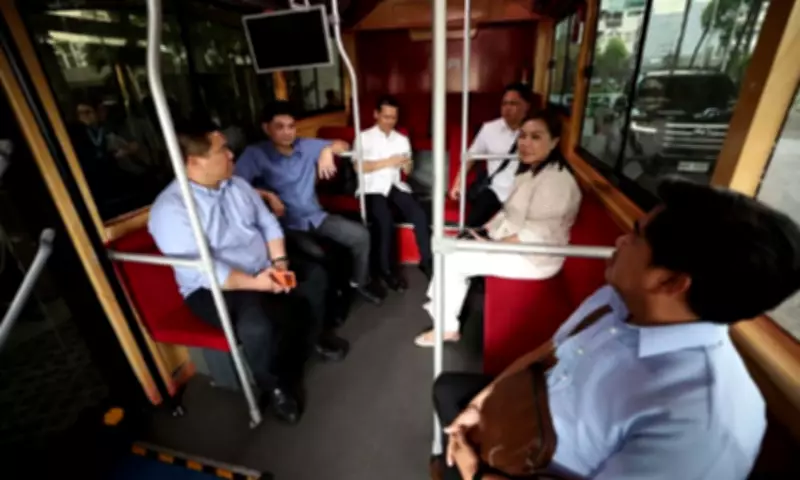
The Cebu Provincial Government is set to revolutionize its public transportation system with the deployment of an initial fleet of 50 electric buses by July 2026. This ambitious initiative aims to modernize mobility, slash fuel dependency, and enhance sustainability across the province.
Strategic Rollout and Coordination
Governor Pamela Baricuatro recently boarded an e-bus with Provincial Administrator Ace Durano and other officials, signaling the start of this transformative project. In coordination with Global Electric Transport (GET) Philippines, led by president Freddie Tinga, the government is identifying key routes that will connect cities and island destinations like Camotes and Bantayan.
Baricuatro emphasized that this effort is part of a broader push to upgrade mobility systems and reduce reliance on diesel-powered vehicles, involving collaboration with national agencies and private partners.

Financing and Cost Efficiency
In an interview on April 21, 2026, Provincial Administrator Ace Durano detailed the financing model, backed by the Department of Transportation (DOTr) and the Department of Trade and Industry (DTI). He highlighted the economic urgency, noting that rising fuel prices have driven diesel-powered public utility vehicle operating costs to about P50 per kilometer.
In stark contrast, electric buses offer a more viable alternative with operating costs estimated at only P5 per kilometer. Each unit costs around P4.5 million, with manufacturers covering half the expense. The remaining amount will be loaned to transport cooperatives through the DTI’s Small Business Corp., allowing operators to pay based on their earnings without upfront cash outlays.
Operations and Route Planning
Durano explained that the Provincial Government will lead in establishing routes based on commuter demand to ensure reliable service. Initial operations will span from Naga to the South Bus Terminal and from the North Bus Terminal to Danao. Approximately 50 accredited transport cooperatives may participate voluntarily, with the program designed to replace existing vehicles rather than add to them, addressing traffic congestion concerns.
Manufacturers will also handle maintenance and charging infrastructure in exchange for a share in revenues, with charging stations currently being prepared ahead of the July rollout. Additionally, the buses will feature a mobile app for real-time tracking and advance ticket purchases.
Future Expansion and Sustainability Goals
The Provincial Planning and Development Office is set to submit technical studies and a letter of intent to the DOTr and DTI to formalize the project. Expansion before September is targeted as part of Cebu’s long-term transition to a sustainable public transport system, with routes planned across cities, municipalities, and island destinations.
Durano underscored that this initiative reflects the Provincial Government’s commitment to helping transport operators regain profitability by shifting to cost-efficient vehicles, ultimately fostering a greener and more economically resilient transportation network.