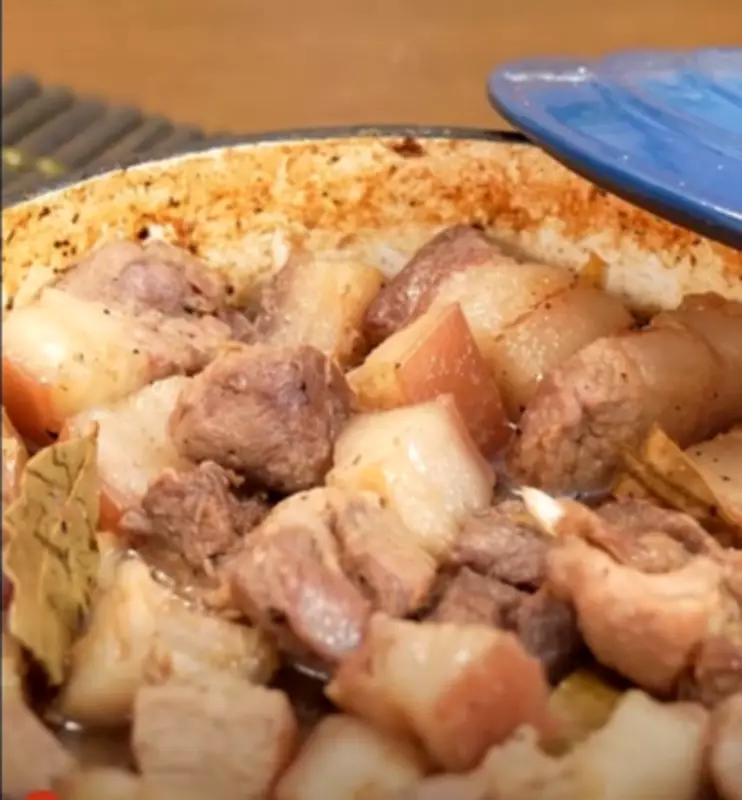
Mastering the Art of Adobong Puti: A Filipino Culinary Classic
Adobong Puti, or white adobo, stands as a beloved staple in Filipino cuisine, celebrated for its rich flavors and straightforward preparation. Unlike its darker counterpart, this version omits soy sauce, allowing the natural tastes of pork and aromatics to shine through. This recipe provides a comprehensive guide to creating an authentic Adobong Puti that will delight your taste buds and impress your family and friends.
Essential Ingredients for Adobong Puti
To begin, gather the following ingredients, divided into two sets for clarity:
- Set A (Base Ingredients): 1 kilogram of pork belly with skin and fat, cut into large chunks; 1 whole head of garlic, crushed with skin on; 1 to 2 tablespoons of whole black peppercorns; 1 teaspoon of cracked black pepper; 3 to 4 bay leaves.
- Set B (Seasoning and Sauce): ½ cup of cane or coconut vinegar; 3 tablespoons of fish sauce; ½ cup of water, optional if needed for consistency.
Step-by-Step Cooking Instructions
Follow these detailed steps to ensure your Adobong Puti turns out perfectly every time.

Step 1: Prepare the Pork
Arrange the pork belly chunks in a wide pan, ensuring the skin side faces down. This technique helps render the fat effectively and enhances the sauce's flavor by allowing the fat to integrate smoothly during cooking.
Step 2: Add Aromatics
Incorporate the crushed garlic, whole peppercorns, cracked black pepper, and bay leaves into the pan. These aromatics infuse the pork with a deep, savory aroma as it simmers, building the foundation of the dish's distinctive taste.
Step 3: Season and Simmer
Pour in the vinegar and fish sauce. Do not stir immediately; allow the vinegar to boil uncovered for 3 to 5 minutes. This process helps mellow the vinegar's sharpness, resulting in a smoother, more balanced sauce that highlights the adobo's pure flavors.
Step 4: Simmer Gently
Reduce the heat to low and let the pork simmer slowly. As it cooks, the fat will meld with the sauce, creating a luscious, oily layer characteristic of Adobong Puti. Continue simmering until the vinegar reduces, concentrating the flavors and ensuring the dish remains true to its white adobo roots.
Step 5: Tenderize the Pork
Keep simmering the pork until it becomes tender. For a saucier version, add a small amount of liquid to the pan if needed. If you prefer a drier adobo, allow the sauce to reduce further until the meat glistens with rendered fat, achieving a rich, concentrated texture.
Step 6: Serve and Enjoy
Transfer the cooked pork to a serving dish. Adobong Puti pairs excellently with hot steamed rice or leftover rice. Enhance your meal with simple sides such as fresh tomatoes, salted eggs, or pickled vegetables for a complete and satisfying Filipino dining experience.

Tips for Perfect Adobong Puti
- Use high-quality pork belly with a good balance of meat and fat for optimal flavor.
- Adjust the amount of peppercorns and bay leaves to suit your taste preferences.
- Allow the vinegar to boil uncovered as directed to achieve the desired mellow tang.
- Serve immediately for the best texture and taste, though leftovers often taste even better the next day.