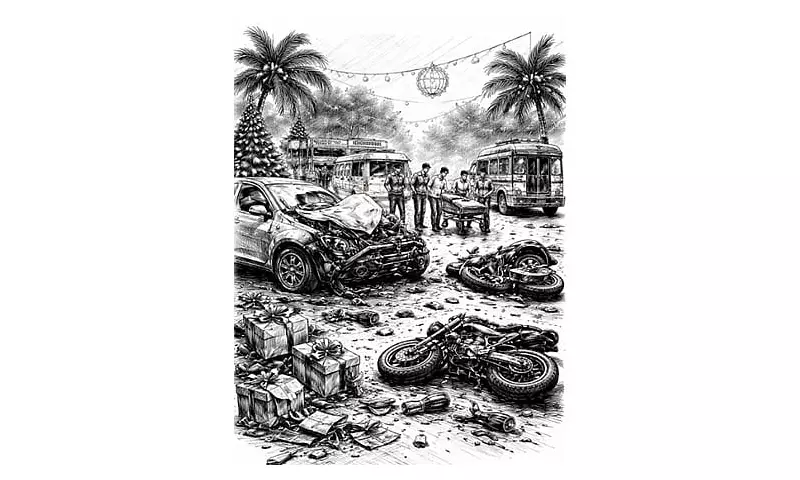
The Department of Health (DOH) has released alarming data revealing a severe spike in road accidents during the recent holiday season. The report, which compiles data from 68 hospitals nationwide, paints a grim picture of road safety in the country.
A Disturbing Statistical Snapshot
From December 21, 2025, until 5:00 AM on January 2, 2026, authorities recorded a staggering 1,113 road accident cases. This period, known for increased travel and festivities, turned deadly for some, with seven individuals losing their lives. A closer look at the numbers reveals critical risk factors: a overwhelming majority of the incidents, 787 cases, involved motorcycles. Furthermore, 135 accidents were linked to drunk driving. Perhaps most telling is that out of 965 patients, most were not using essential safety gear like helmets or seatbelts at the time of their accident.
Beyond Driver Error: A Systemic Failure
While it is easy to blame reckless or intoxicated drivers, a deeper analysis points to a multi-layered crisis. The problem extends beyond individual lapses in discipline. Experts highlight systemic weaknesses including lax traffic laws, insufficient safety infrastructure, and a lack of comprehensive public education on road safety. The data underscores that the "drive at your own risk" mentality is prevalent, often with fatal consequences, especially among motorcycle riders who comprised five of the seven fatalities.

Charting a Path to Safer Roads
Addressing this persistent crisis requires a concerted and multi-agency effort. Campaigns alone are insufficient. A sustainable solution demands strong governance, consistent law enforcement, and active public participation. Key recommendations from safety advocates include:
- Enhanced Enforcement: Regular checkpoints, mandatory breathalyzer testing, and real-time speed monitoring with strict penalties for violators.
- Mandatory Safety & Education: Aggressive public education campaigns focusing on youth and motorcycle riders, coupled with strict enforcement of helmet and seatbelt laws.
- Stricter Licensing: Rigorous testing for new licenses and mandatory re-training or road safety courses for violators during license renewal.
- Infrastructure Upgrade: Installation and improvement of road safety features like rumble strips, clear signage, and proper pedestrian crossings in high-risk areas.
- Data-Driven Coordination: Improved inter-agency coordination between the DOH, Department of Transportation (DOTr), Land Transportation Office (LTO), Philippine National Police-Highway Patrol Group (PNP-HPG), and Local Government Units (LGUs) to use accident data for targeting danger zones.
- Faster Emergency Response: Streamlining emergency medical response to save lives in the critical window before professional help arrives.
The DOH report serves as a sobering reminder that road safety is a shared responsibility. Reducing the tragic toll of accidents requires a unwavering commitment to systemic change from both authorities and every road user.