Nutrition Crisis Deepens in Philippines as Diets Fall Short of Standards
Published on: February 16, 2026, 3:32 am
Many Filipinos continue to fall significantly short of recommended nutrition and healthy lifestyle standards, with unhealthy diets exacerbated by the high cost and limited access to nutritious food. Based on the comprehensive 2023 National Nutrition Survey, the Department of Science and Technology–Food and Nutrition Research Institute (DOST-FNRI) has confirmed that energy and nutrient intakes across all population groups remain persistently below recommended levels.
Key Findings from the 2023 National Nutrition Survey
The 2023 survey reveals alarming statistics that underscore widespread health challenges:

- Low nutrient intake: Energy and nutrient consumption across all population groups remains consistently below recommended levels, indicating a systemic failure in dietary adequacy.
- High cholesterol and triglycerides: One in ten adults suffers from high cholesterol, while two in ten adults have elevated triglycerides, pointing to significant cardiovascular risk factors.
- Physical inactivity: Three out of four adolescents are physically inactive, and nearly half of all adults lack sufficient physical activity, contributing to obesity and related health issues.
- Risk behaviors: Six out of ten adults engage in binge drinking, and two out of ten adults smoke, further compounding health risks and lifestyle-related diseases.
"These figures highlight persistent nutrition, lifestyle, and food system challenges that affect health and well-being across the life course," the institute stated in a post on Monday, February 16, 2026. The data paints a concerning picture of a population struggling with multiple fronts of health deterioration.
Nutritional Guidelines for Filipinos and Public Outreach
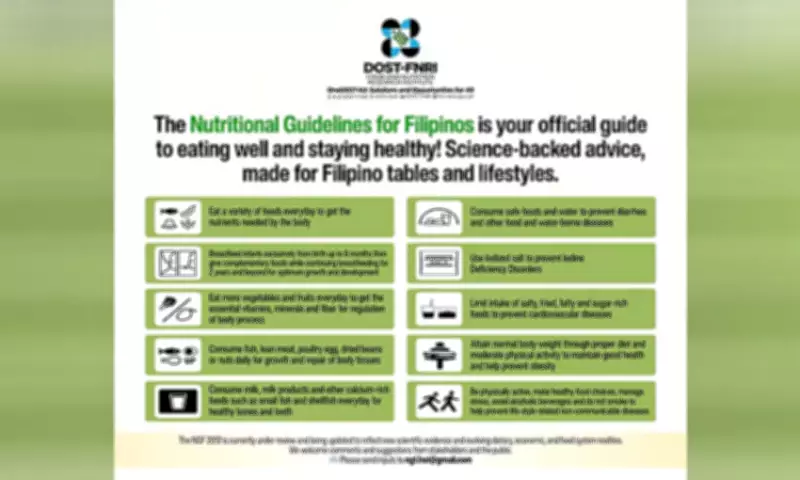
In the Philippines, the Nutritional Guidelines for Filipinos (NGF) serve as the country's official food-based dietary guidelines, offering science-based advice tailored specifically to Filipino diets and daily living to help prevent non-communicable diseases such as diabetes, heart disease, and cancer. The NGF encourages Filipinos to:
- Eat a variety of foods in the right amounts.
- Stay physically active through regular exercise and movement.
- Limit salt, sugar, and alcohol intake, and avoid smoking entirely.
These essential messages were translated into Filipino as the "10 Kumainments" by the National Nutrition Council to make the guidelines more relatable and accessible to the general public. This translation effort aims to bridge the gap between scientific recommendations and everyday understanding.
Revising Guidelines with a Food Systems Approach
DOST-FNRI announced it is currently revisiting the NGF using a comprehensive food systems approach that focuses on commonly eaten Filipino foods, promotes appropriate portion sizes, and recommends dietary patterns adaptable across different income levels. This revision aims to address the economic barriers that many families face when trying to access nutritious options.
The institute emphasized that aligning nutrition guidance with real-life food environments can help Filipinos make healthier choices more consistently. This strategy also supports broader policies and partnerships aimed at making healthy diets accessible, affordable, and sustainable for all segments of society. By integrating practical considerations into dietary advice, the hope is to create a more effective framework for improving national health outcomes.