THE Philippines has not yet reached a formal agreement with Russia on regular oil imports, with President Ferdinand “Bongbong” Marcos Jr. citing geopolitical factors and other complexities that continue to shape discussions between Manila and Moscow.
Marcos on Negotiations
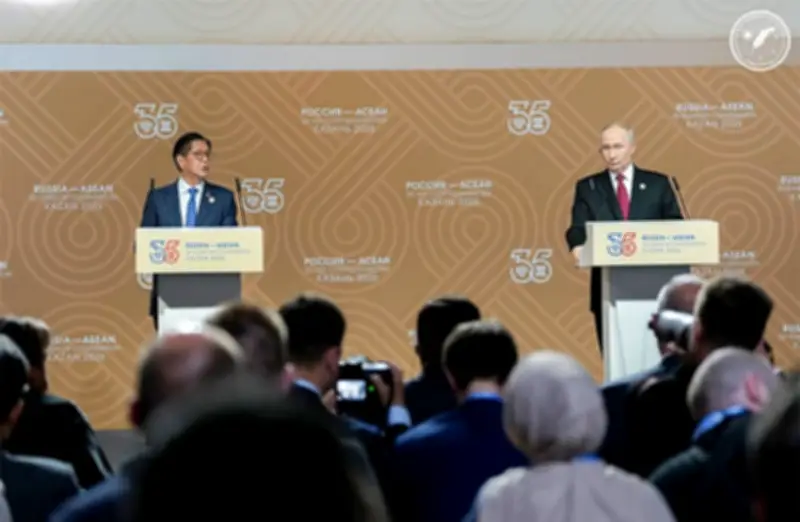
In an interview with reporters on the sidelines of the Asean-Russia Commemorative Summit in Kazan, Marcos said negotiations on a possible long-term petroleum supply arrangement remain ongoing, noting that such agreements involve more than commercial considerations.
“There are many complications to that. It is not that simple, signing a trade agreement,” the President said. “There are, of course, political considerations -- geopolitical considerations… But when two parties are determined to make it work, I'm always very confident that it will work and we will find a way around those challenges and those complications so that we make it a reality,” he added.

Energy Security Discussions
The issue of energy security was discussed during the summit which was attended by Russian President Vladimir Putin and other regional leaders. Marcos said both sides agreed to continue exploring ways to strengthen cooperation in the energy sector, but no binding commitments were reached.
He explained that the Philippines’ previous purchases of Russian petroleum products were largely driven by supply disruptions brought about by conflicts in the Middle East, which prompted the Philippine government to seek alternative sources of fuel as global markets experienced volatility.
Ad Hoc Basis
Marcos said the government is now looking at establishing a more organized framework for sourcing petroleum products from non-traditional partners, including Russia, to help ensure a stable supply of energy for the country. “The reason being is that what we have been doing with Russia in terms of providing oil products to the Philippines has been on a very ad hoc basis,” Marcos said.
Geopolitical Concerns
Despite the potential benefits of diversifying energy sources, the President acknowledged concerns that deeper economic engagement with Russia could draw criticism from countries that oppose Moscow’s military actions in Ukraine. Marcos emphasized that the Philippines remains committed to promoting peace and does not want to be associated with activities that could be perceived as supporting armed conflict.
He said the government would carefully evaluate any future arrangement to ensure that the country does not inadvertently become part of systems that could contribute to war. “Certainly, that's a concern. And it's not something, as I said, as I've always said, the Philippines is one of the, if not the greatest sponsor, supporter for peace. And not only in our region but everywhere else,” said Marcos.
“Certainly, that is not something that we do not like to be accused of. And would not like to be part of. We will certainly not want to be part of any system that furthers conflict anywhere in the world. Those are the decisions, some of them very nuanced decisions, that we will have to be making in the future,” he added.
Trade Volume and Multipolar World
Marcos argued that the Philippines’ current trade volume with Russia, which is currently at $5 billion, remains relatively small and cannot realistically be viewed as a significant source of funding for any conflict. The President also placed the discussions within the context of a changing global landscape, saying the Philippines is adapting to what many leaders now describe as a multipolar world. He noted that countries are increasingly pursuing a wider range of economic partnerships rather than aligning exclusively with traditional power blocs.
Marcos said the Philippines is continuing to adjust its foreign and economic policies to reflect these shifts, while maintaining long standing relationships with traditional allies. “The traditional power structures and the traditional powers are no longer the powers that exist when, for example, the United Nations was formed right after the war. So we, the Philippines, is just responding, adjusting to the new reality,” he said.

“Very early on, I think you will remember, I already said that the Philippines no longer subscribes to a bipolar world where you have to choose one side over the other. And during this summit, there was a lot of talk about multipolarity, the multi polar world that we now have to deal with, which may be a bit more complex but it also provides more opportunities than we had before. And that I think was one of the main results and findings that we arrived at during the summit,” he added.