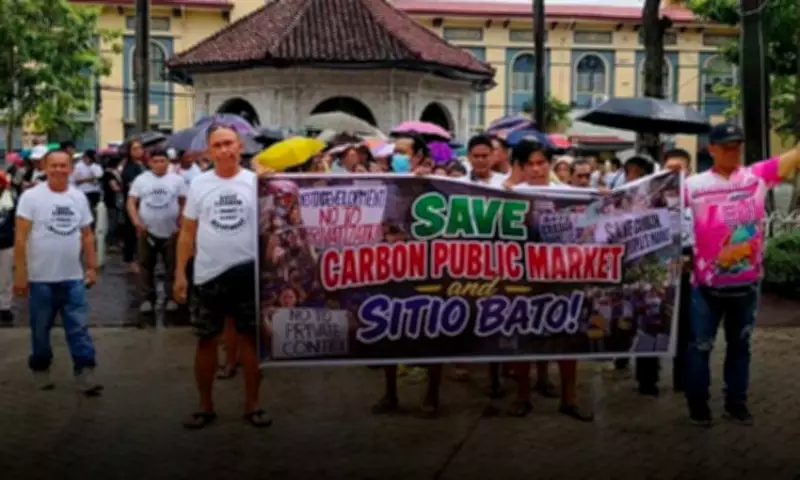
A Regional Trial Court (RTC) in Cebu City has denied a bid to temporarily stop the implementation of the joint venture agreement (JVA) between the Cebu City Government and Megawide Construction Corp. for the redevelopment of Carbon Public Market. The court ruled that the plaintiffs failed to show a clear legal right and irreparable injury.
The ruling by RTC Branch 16, however, does not yet decide whether the JVA is valid or void. It will proceed with the main case, with the pre-trial set for June 24, 2026.
Background of the Dispute
The dispute centers on a 50-year JVA signed in January 2021. Megawide, through its subsidiary Cebu2World Development Inc., secured the contract to transform the historic Carbon area into a modern commercial hub. The project spans the main public market, Freedom Park and portions of the waterfront in Barangay Ermita.

Under the deal, the City provides the land while the developer finances the construction. Megawide expects to recover its multi-billion peso investment through the operation of the new market facilities. While construction is already underway, a group of vendors and residents known as Carbohanong Alyansa Alang sa Reporma ug Bahandianong Ogma sa mga Nanginabuhi (Carbon) sought to freeze the project through a temporary restraining order (TRO) and a preliminary injunction, arguing that the contract itself is illegal.
Court's Reasoning
In his resolution, Judge Corminal said injunctive relief is an extraordinary remedy granted only when a right is clearly violated and damage is urgent. He found that the vendors' concerns — displacement, business disruption and increased costs — did not meet the high legal threshold of 'irreparable injury' at this stage. Instead, Corminal said these issues could be resolved during the main trial. This decision removes the immediate legal barrier to construction, though it does not yet validate the contract itself.
Perspectives on the Project
The redevelopment project has become a flashpoint in the debate over the future of Carbon Public Market and other public spaces in Cebu City. Supporters, including city officials and Megawide, have described the phased modernization as necessary to improve market facilities, sanitation, safety and order. They have also maintained that the project would turn the aging market district into a world-class facility without displacing current traders.
Critics, however, argue that the JVA was rushed and lacks transparency. They fear that the redevelopment will lead to higher rental fees, displacement of small vendors, and loss of the market's cultural heritage. The group Carbohanong Alyansa has vowed to continue its legal fight, stating that the denial of the TRO is only a temporary setback.
What's at Stake
If the redevelopment succeeds, it could serve as a model for modernizing other aging infrastructure. However, if the critics are correct, the project might fundamentally alter the social fabric of the city's oldest trading center, potentially pricing out the very people it was built to serve. For the vendors, the case is a fight for economic survival; for the City, it is a test of its ability to implement large-scale infrastructure through private investment.
Unresolved Questions
The court has yet to decide the central question of whether the JVA is valid or void. While work continues, the legal foundation of the project remains under scrutiny. It also remains unclear how the transition to a privately-operated model will affect the daily prices of essential goods or the long-term tenure of the current vendor community.
Looking Ahead
With the request for a TRO denied, the redevelopment will proceed through its planned phases. The legal battle now moves to the main case, where both sides will present evidence regarding the contract's legality. The pre-trial is scheduled for June 24, 2026, at RTC Branch 16.