The Davao City Social Welfare and Development Office (CSWDO) has recently called on barangay leaders to prioritize the systematic profiling of their communities and the thorough analysis of collected data. This initiative is designed to enhance the protection of vulnerable sectors at the grassroots level.
Orientation for Barangay Leaders
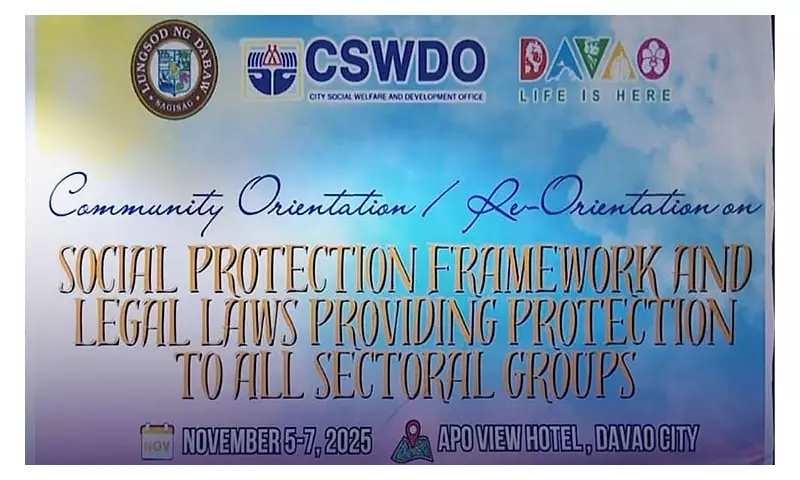
The call to action was made during a crucial orientation and re-orientation session held from November 5-7, 2025, at the Apo View Hotel. The event focused on the social protection framework and the legal laws that safeguard all sectoral groups within the city.
Gina Molon, the Chief of the CSWDO Social Services Welfare Operations Division, stated that the three-day orientation for Districts 1 to 3 was essential. It aimed to help barangay officials understand the significant role of barangay profiling and the integration of a social protection framework into their local plans.

Data as the Foundation for Action
Molon emphasized that since budgeting and program development rely heavily on accurate information, there is an urgent need to strengthen barangay profiling efforts. Providing data is critically important, she noted, not just for creating programs to address abuse and risks to children, but also for managing emergencies and other vital actions within the barangay.
She explained that barangays are the first responders in various incidents, including disasters. Therefore, the current push is to realize the establishment of legal and strategic mechanisms within their guidelines. This perspective on social protection must be embedded in their plans, especially with the coming year ahead.
Aiming for Inclusive Protection
The core principle reinforced during the orientation was that no one should be left behind. This social protection framework comprehensively covers all vulnerable community sectors, including women, children, and persons with disabilities.
Through this initiative, the CSWDO aims to fortify programs at the grassroots level. The goal is to heighten conscious efforts to establish institutionalized mechanisms for social protection, ensuring a safer and more secure environment for every resident.