As I write this column, the smoke of the ongoing battle in the Senate is still up in the air. Thus, I would prefer to comment on something more on the level of ideas and less empirical: the independence of the Senate. The embattled Senate President Alan Peter Cayetano repeatedly pronounces it like a battle cry, or perhaps like a prayerful mantra since he tries to sound pious. It would seem that he wants us to be grateful to him for ensuring that the executive branch does not encroach on the upper house. He says he is the first Senate president elected without any dictation from Malacañang. All these pronouncements are self-serving and historically inaccurate.
Historical Revisionism
The Senate president during the first half of President Noynoy Aquino’s term was Juan Ponce Enrile. It is unimaginable that President Aquino wanted him to be the Senate president. After all, there was bad blood between the Aquinos and Enrile. The latter was alleged to have at least supported several coup attempts against PNoy’s mother. Cory Aquino in fact fired him as defense secretary. And if we go back to the period of martial rule, Enrile played a crucial role in bringing Ninoy Aquino to prison. It would be a long stretch of the imagination to suggest that Enrile was the choice of PNoy. Thus, we only have to recall recent history to show the falsity of Cayetano’s claim.
True Independence in Action
Furthermore, independence of the Senate is not a one-shot deal that is shown only in how a Senate president is chosen. It is manifested in a legislator’s everyday resolve not to be dictated by anyone except one’s own convictions on what is good for the people. The 1987 Senate was filled with supporters of Cory Aquino. In fact, they were elected to a large degree because of the Cory magic. But they repudiated the explicit wish of Cory to extend the American military bases. Cory joined a march to plead to the senators to allow the United States to retain Clark Air Base and the Subic Naval Base. But the Senate said no. Among those who said no were Cory supporters like Rene Saguisag, Wigberto Tañada, Nene Pimentel and Jovito Salonga. That is how independence is shown. An important footnote here is that those who said no to Cory maintained their friendship with her.

Another Example
Another example from recent history of a Senate president showing independence from the Executive can be taken from the impeachment of President Erap Estrada. Nene Pimentel was the Senate president. But when the majority of his colleagues voted not to allow the opening of a sealed envelope, which supposedly contained damning evidence against Erap, Pimentel resigned.
The Current Crisis
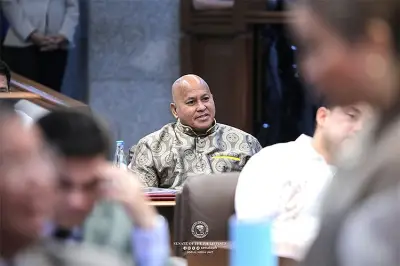
It would appear that the idea of the independence of the Senate is used as a mantle to cover the reality that Cayetano’s hold of power is increasingly untenable. It started when he surreptitiously invited Bato dela Rosa to come to the Senate and be the game changer. Having obtained the Senate presidency by the thinnest of margins, he has to ward off any attempt to unseat him. But now his insistence that he is still in command seems hollow and even pathetic. How true are the words of Shakespeare, “Uneasy lies the head that wears a crown.”
Lastly, there are also the whispering voices that the bottom line of all this brouhaha is the forthcoming impeachment trial. I can commend Cayetano for his supposed independence from President Marcos. But independence from the President should not mean subservience to someone else.